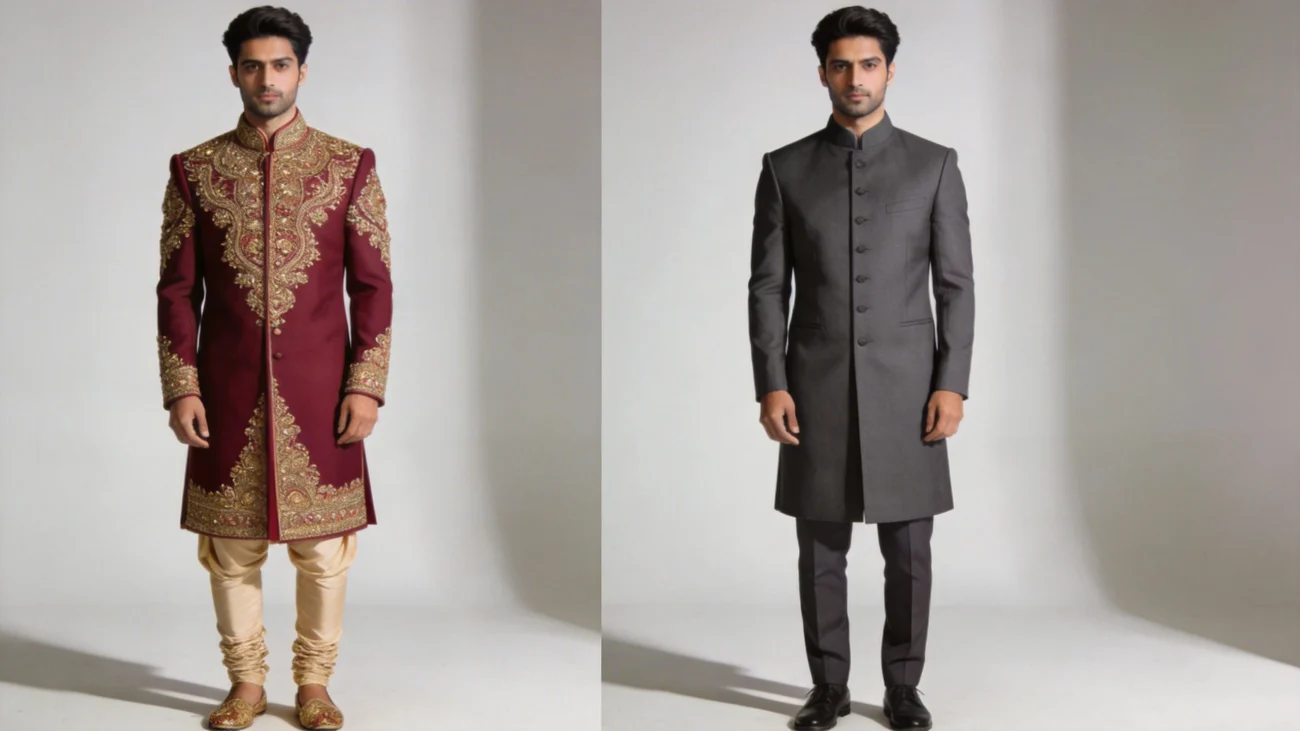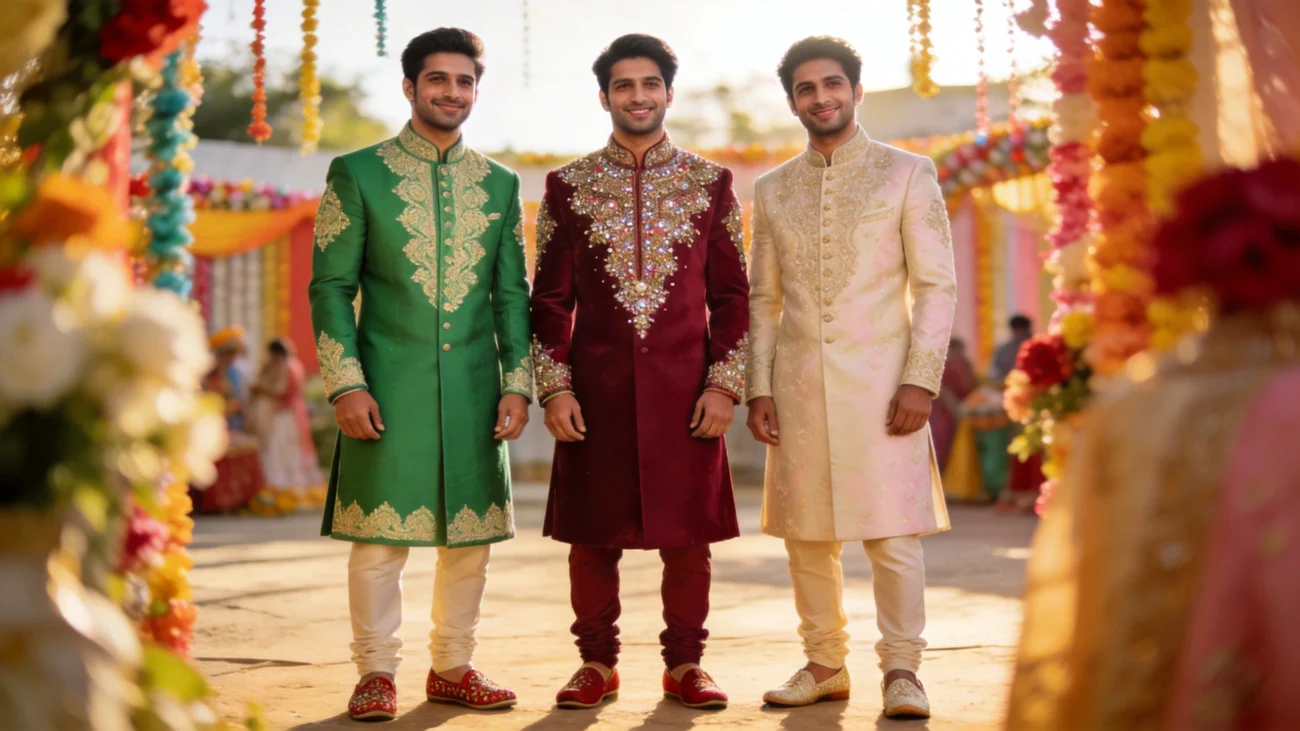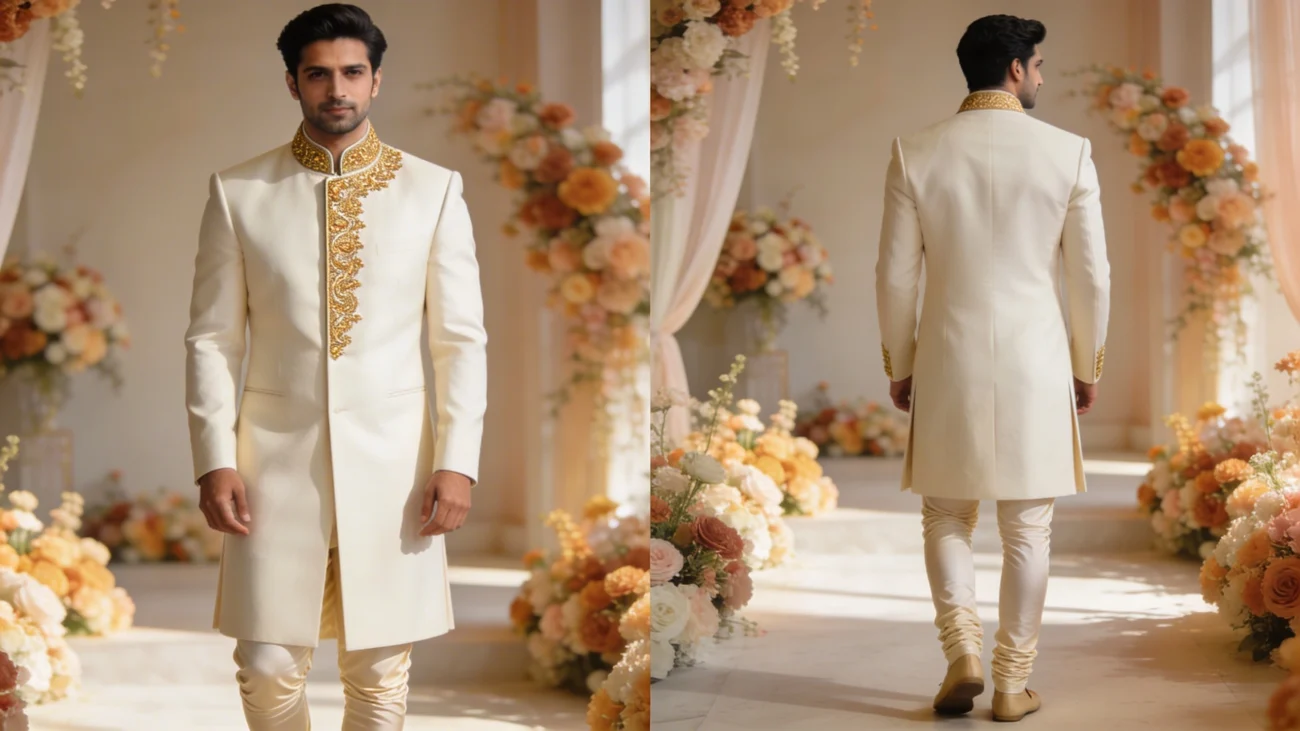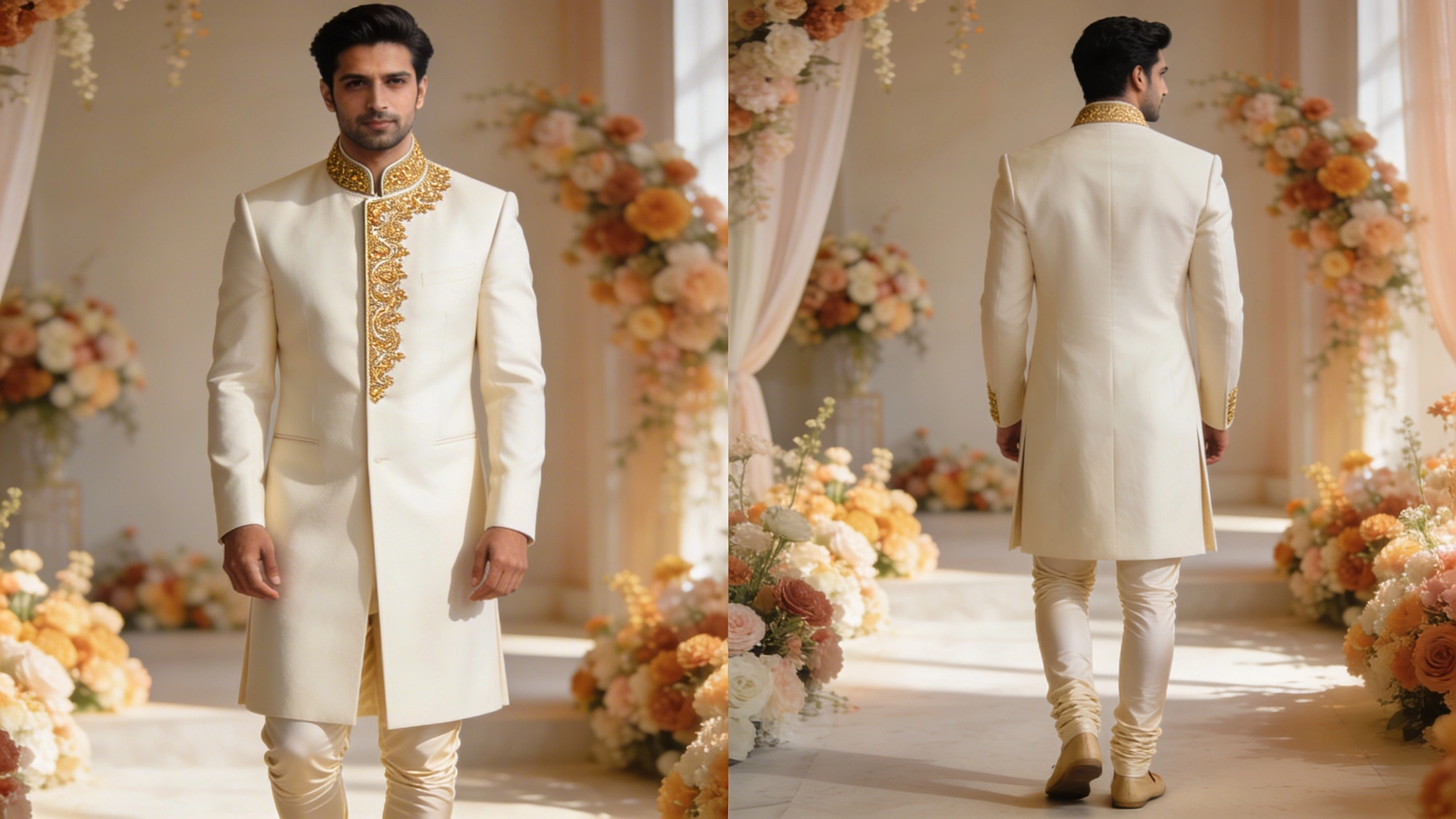
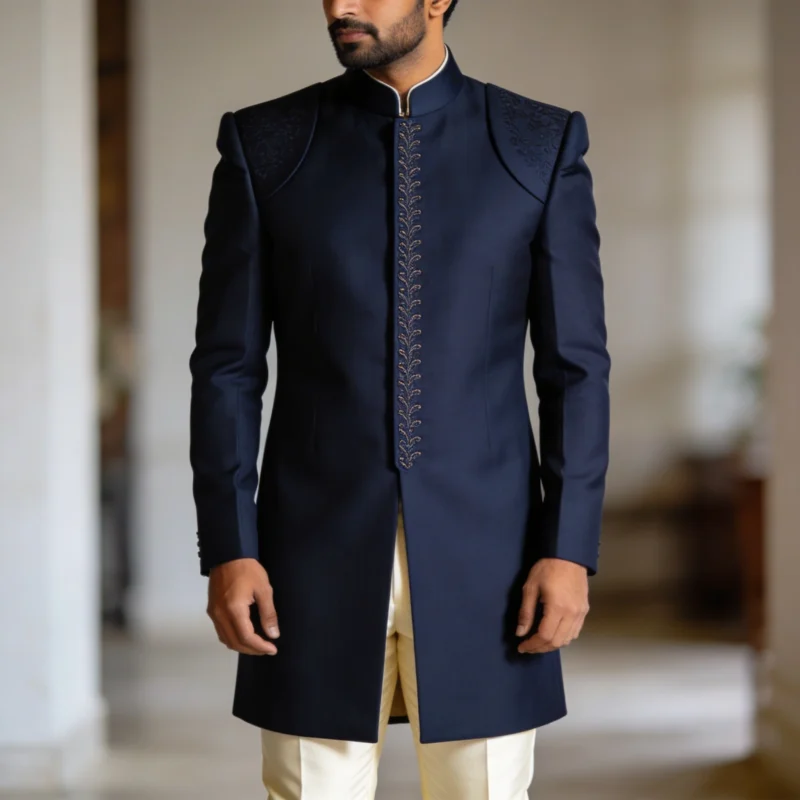
What makes the wedding prince coat unique is its hybrid silhouette: the fitted torso and sharp shoulders of a blazer combined with the longer, streamlined body of a sherwani. Details like a bandhgala collar, covered buttons, and subtle embroidery keep the look regal, while the mid-thigh length ensures ease of movement and contemporary appeal.
A wedding prince coat for groom sits between a sherwani and a suit jacket in terms of structure, giving grooms a tailored yet culturally rooted option. It typically falls 8–12 inches below the hip, which lengthens the torso and looks flattering in full-length photos. This length also hides waistband creases of shalwar or trousers, keeping the front clean and polished.
Signature Silhouette and Construction
The signature prince coat for men usually features a bandhgala or Nehru collar standing 3–4 centimeters high, creating a sharp neck frame for turbans and necklaces. Light shoulder padding shapes the upper body without looking bulky, while a slightly tapered waist (2–4 centimeters in from the chest) creates a V-shape. Side vents or a single back vent allow comfortable sitting on stage sofas and in cars.
Embellishments, Buttons, and Cultural Details
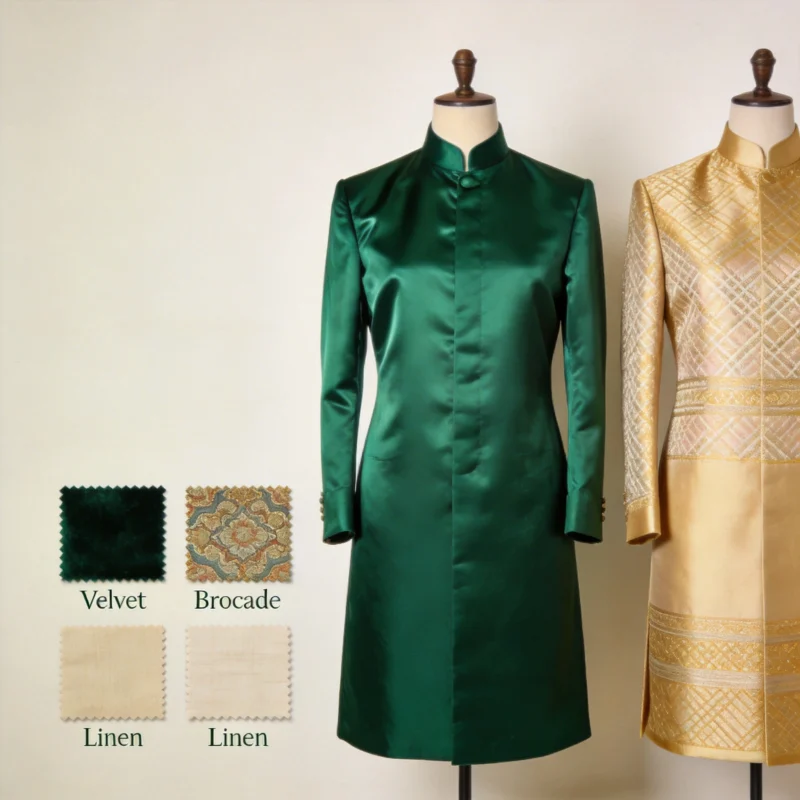
Unlike office blazers, a wedding prince coat often includes hand embroidery on the collar, placket, or cuffs using zari, resham, or micro-sequins. Grooms usually choose 6–8 metallic or fabric-covered buttons, spaced 6–7 centimeters apart, which draw the eye vertically and make the torso appear longer. Subtle motifs—like paisleys, florals, or geometric jaal—can echo family heritage or regional styles without overwhelming the entire outfit.