Modern Prince Coat Design Trends for Men’s Wedding Wear

Scroll through any 2025 wedding album and you’ll see it: the prince coat has quietly replaced the basic sherwani for style-focused grooms and guests. Sharp cuts, richer fabrics, and smarter detailing mean your coat design now says as much about you as the venue or décor.

Modern prince coat design in South Asian menswear has evolved from stiff ceremonial outfits into tailored, versatile pieces that work across mehndi, baraat, and reception events. Today’s prince coat for men balances tradition with clean, contemporary lines, letting you pair it with shalwar, churidar, or slim-fit trousers without looking overdressed.

Keeping up with these design shifts matters because wedding photography, social media, and HD videography expose every seam, wrinkle, and button choice. A dated silhouette or awkward length can age your entire look. Understanding current trends in cut, fabric, and color helps you commission or buy a wedding prince coat that still looks current five years from now.

Whether you’re a groom, best man, or a tailor advising clients, knowing how these elements interact—fit, fabric weight, embroidery density, and color tones—lets you create outfits that photograph well, feel comfortable for six-hour events, and justify their price tags.

1
prince coat design

Key Elements of Contemporary Prince Coat Design

Key Elements of Contemporary Prince Coat Design

Key elements of a contemporary prince coat include a balanced length that flatters your height, a neat band or stand-up collar, and precise button placement that streamlines the torso. Modern designs also emphasize clean armholes and tailored sleeves, creating a sharp, vertical line that reads well in both photos and video.

Current prince coat design is all about controlled structure: clean shoulders, defined waist, and a length that complements both kurta and trousers. Designers in Lahore, Karachi, and Delhi are cutting coats with 1.5–2 cm shoulder padding, slight waist suppression, and hemlines hitting mid-thigh to just above the knee, giving enough coverage without overwhelming shorter frames.

Silhouette, Length, and Proportions

The most wearable modern silhouette uses a semi-structured chest and a gently tapered waist, reducing bulk over traditional straight cuts. For men between 5’6″ and 5’10″, a 34–36 inch coat length usually balances the body, especially when worn over a 40–42 inch kurta. Taller men can push to 38 inches, but anything longer risks drifting into sherwani territory.

Lapel, Collar, and Closure Details

Collar styles have shifted from ornate brocade bands to sleeker bandh and Chinese collars with 2.5–3.5 cm height, which frame the face without digging into the neck. Many wedding prince coat designs now mix hidden plackets with 6–8 visible decorative buttons, often in metal or mother-of-pearl, creating a vertical line that subtly elongates the torso in photos.
3

Minimalist vs Heavy Embroidery: Choosing Your Prince Coat Design Style

Minimalist vs Heavy Embroidery: Choosing Your Prince Coat Design Style

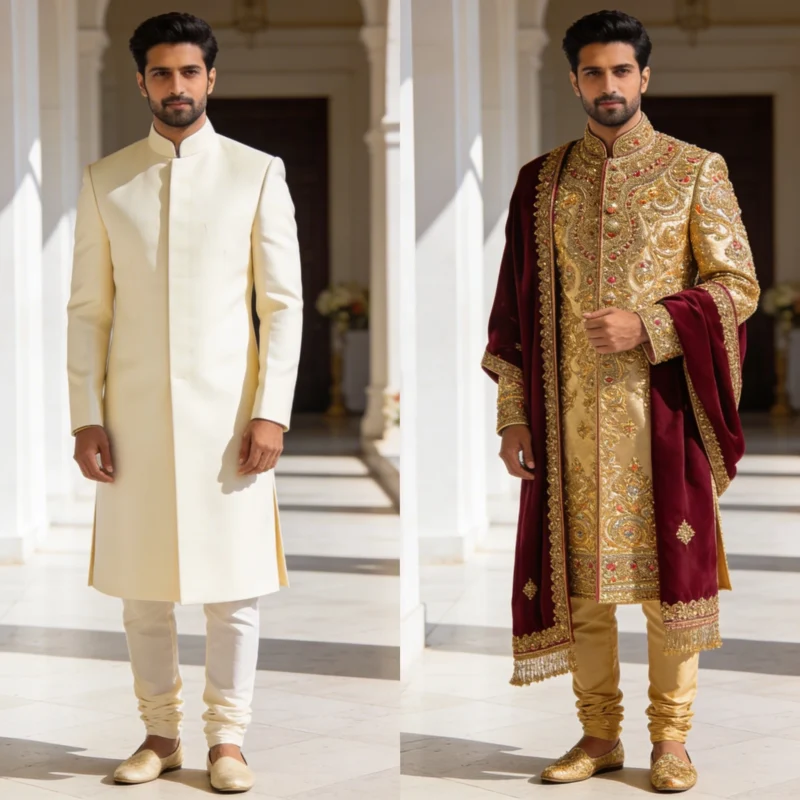
Choosing between minimalist and heavily embroidered prince coats comes down to personal style and wedding scale. Minimal designs feel modern, versatile, and easy to re-wear, while rich embroidery suits grand, traditional celebrations. The key is balancing ornamentation with a flattering cut so the details enhance, rather than overpower, your frame.

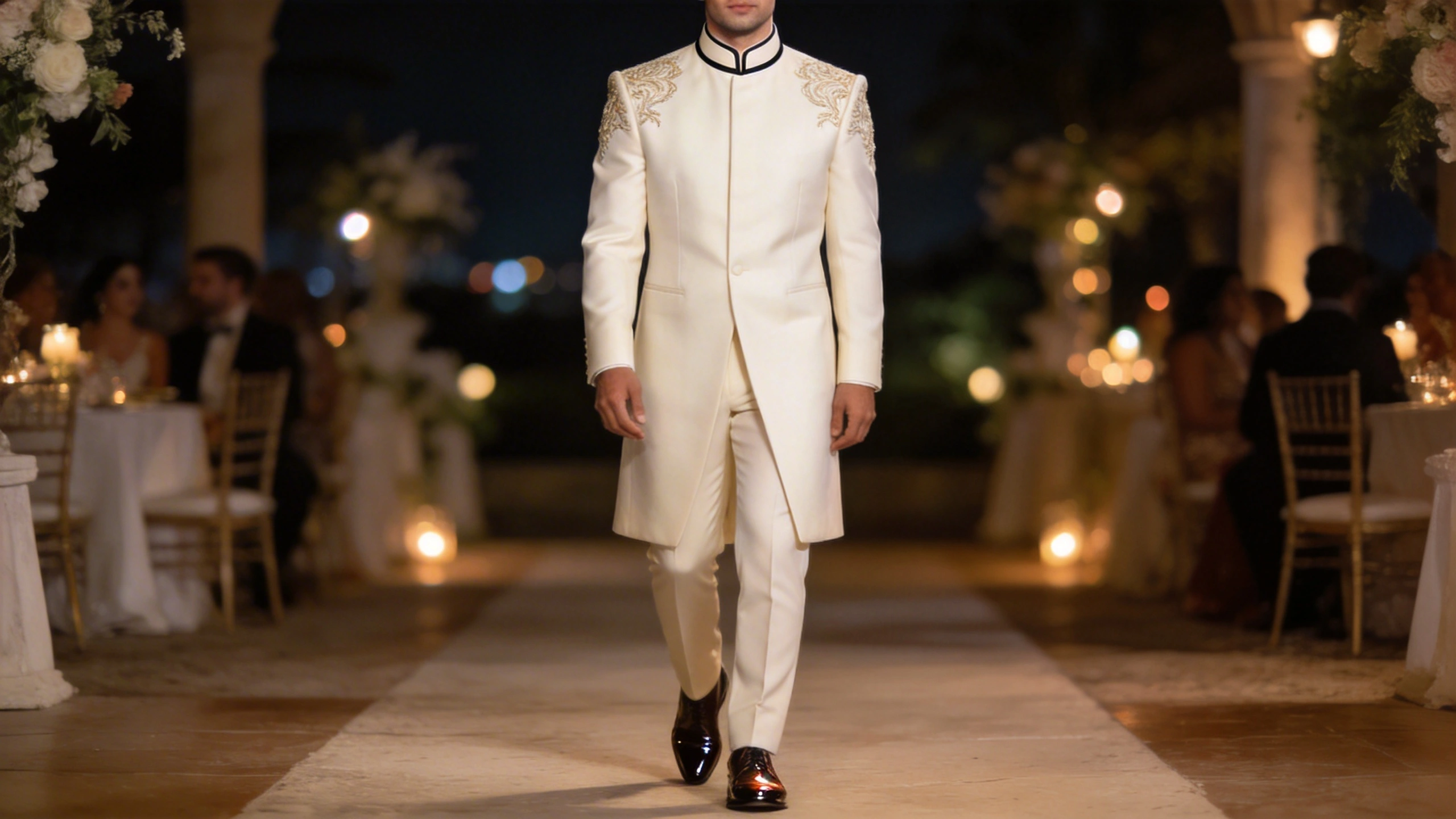
Embroidery density dramatically changes how formal and traditional a prince coat appears. Minimalist designs rely on clean cuts, premium fabric, and small accents around the collar, placket, or cuffs. Heavy embroidery, often using zardozi, resham, and dabka, turns the coat into a statement piece, especially for grooms standing under bright stage lights and floral backdrops.

When Minimalist Detailing Works Best

Minimalist prince coat design suits men who prefer versatility and subtlety. A raw silk coat with only 2–3 cm of tonal embroidery on the collar and cuffs can be reworn at receptions, valimas, or even corporate galas. This approach also photographs better in daylight events, where excessive shine from crystals or sequins can blow out highlights in DSLR and phone cameras.

Strategic Use of Heavy Embellishment

Heavily embroidered coats make sense for the main baraat or nikkah when you want the groom clearly distinguished from guests. Concentrating dense work along the front panels and shoulders, while keeping the back relatively lighter, reduces weight and heat buildup. Many designers now limit embellishment to 30–40% of the surface area, preserving mobility and preventing fabric from sagging over time.

5

Fusion Prince Coat Design: Western Cuts with Eastern Detailing

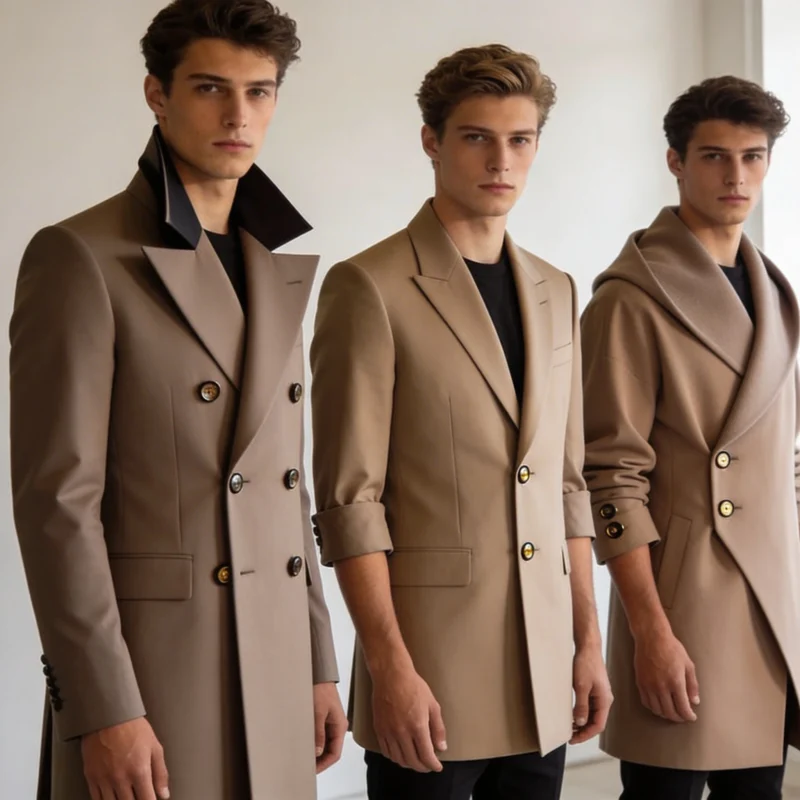
Fusion styles blend the sharpness of Western blazers with the cultural richness of Eastern embellishment. Designers are experimenting with blazer-like armholes, slimmer sleeves, and slightly lower button stances while retaining band collars, traditional buttons, and subtle embroidery. This hybrid approach creates a prince coat design that transitions smoothly from nikah ceremony to reception dinner without feeling costume-like.

Fusion Prince Coat Design: Western Cuts with Eastern Detailing

Key Fusion Features to Consider

Fusion coats often use suiting fabrics or lightweight jacquards to maintain a crisp, tailored appearance. The goal is to achieve blazer-level mobility while still reading as festive South Asian attire.

  • Two-piece construction with fused fronts and half-canvas chest gives structure without the stiffness of full sherwani builds.
  • Slightly shorter length, around 30–32 inches, pairs well with tapered trousers for reception or engagement events.
  • Band collars combined with single-breasted closures create a modern, streamlined front suitable for semi-formal weddings.
  • Embroidery restricted to collar, pocket welts, and cuff edges keeps the look refined while signaling cultural roots.
  • Matte metal or fabric-covered buttons echo Western suiting aesthetics but maintain continuity with kurta silhouettes.

These fusion designs work particularly well for destination weddings where luggage space is limited. One well-cut fusion wedding prince coat can be styled with a kurta-churidar for the ceremony and with tailored trousers and a pocket square for a cocktail-style reception, maximizing value and reducing packing complexity.

6

Custom vs Ready-Made: Getting the Best Prince Coat Design for You

Choosing between bespoke and ready-made depends on your body shape, timeline, and budget. Custom prince coat design typically costs 20–40% more than off-the-rack but offers precise adjustments for posture, shoulder slope, and arm length. Ready-made options from major brands in Pakistan and India now come in multiple fits, yet still assume fairly standard proportions.

Custom vs Ready-Made: Getting the Best Prince Coat Design for You

Fit, Cost, and Timeline Comparison

Evaluating key metrics—price, alteration scope, and delivery time—helps decide when custom is worth it. The table below outlines realistic ranges found in mid- to upper-tier South Asian markets.

OptionPrice Range (PKR)Delivery TimeAlteration ScopeBest For
Ready-Made (Local Brands)10,000–25,000Same dayLength, sleeve, minor waistLast-minute guests, multiple events.
Ready-Made (Designer)25,000–60,000Same dayLimited; fabric already fixedStyle-conscious guests, receptions.
Made-to-Measure35,000–80,0002–4 weeksFull fit tweaks, limited designGrooms wanting reliable, clean fit.
Fully Bespoke60,000–150,0004–8 weeksPattern from scratch, custom designPrimary groom outfit, photoshoots.
Studio Rental8,000–20,0001–2 daysMinimal, temporary adjustmentsOne-time wearers, budget constraints.

For most grooms, made-to-measure strikes the best balance: you choose fabric, buttons, and embroidery layout while the tailor refines fit over one or two trials. Ready-made works well for brothers and friends, who can prioritize speed and cost, then invest a small amount in tailoring the waist and sleeves for a sharper, more expensive-looking finish.

7

Prince Coat Design Ideas for Different Body Types

Matching prince coat design to body type can visually add or subtract five kilograms in photos. The interplay of length, button stance, shoulder width, and pattern scale shapes how the eye reads your proportions. Tailors who take time to assess posture, chest depth, and hip width usually deliver coats that feel comfortable for long events while flattering the frame.

Prince Coat Design Ideas for Different Body Types

Silhouettes for Tall, Short, Slim, and Broad Builds

Different builds benefit from specific adjustments in cut and detailing. The table below summarizes practical guidelines that many experienced wedding tailors quietly follow.

Body TypeRecommended LengthShoulder TreatmentPattern & EmbroideryButton Stance
Short & Slim32–34 inchesLight paddingSmall motifs, vertical linesHigher, starting near sternum.
Short & Broad34–35 inchesMinimal paddingTonal work, avoid horizontal bordersMid, avoid double-breasted.
Tall & Slim36–38 inchesModerate paddingLarger motifs, contrast embroideryMid to lower, lengthening torso.
Tall & Broad37–39 inchesStructured but not bulkyTonal patterns, medium-scale motifsMid, 6–7 buttons visible.
Average Build34–36 inchesStandard paddingFlexible; depends on eventClassic mid stance.

Shorter men benefit from avoiding heavy borders at the hem, which visually cut the leg line. Broad chests look leaner in darker solids with embroidery focused on the placket rather than shoulders. Tall, slim men can handle bolder jamawar patterns and heavier embroidery without appearing overwhelmed, especially when the coat is balanced with slightly tapered trousers.

8

Future Directions: What’s Next in Prince Coat Design?

Future Directions: What’s Next in Prince Coat Design?

Emerging trends suggest prince coat design will become more sustainable, experimental, and tech-friendly over the next five years. Designers are already testing organic cotton-silk blends, recycled polyester linings, and digital prints that mimic traditional handwoven jamawar patterns. These innovations aim to reduce costs and environmental impact while preserving the opulent look demanded by South Asian weddings.

Sustainability, Tech, and New Aesthetics

Several mid-tier brands in Pakistan and India are introducing QR-coded labels detailing fabric composition and care, helping clients maintain coats for 8–10 years instead of discarding them after two seasons. Expect more muted, Scandinavian-inspired color palettes—sage, stone, and dusty blue—paired with classic Eastern cuts, giving future wedding prince coat styles a quieter, more sophisticated presence on stage and in photos.