How to Choose the Best Sweat Shirt for Men for Everyday Wear

The right sweatshirt can feel like wearable comfort, but a sloppy one drags your whole outfit down. When you understand fabrics, fits, and details, a simple sweat shirt for men becomes a reliable daily uniform that works for commutes, coffee runs, and relaxed office days without looking careless or underdressed.

Choosing a sweat shirt for men starts with knowing how you actually live. Someone walking 10,000 steps daily in a mild climate needs different fabric weights and breathability than a driver in a snowy city. When you match material, fit, and design to your lifestyle, you avoid over‑heating, bulkiness, and stiff fabrics that stay unworn.

Comfort also ties directly to construction details like ribbing quality, seam placement, and neck shape. A well‑designed sweatshirt moves with you instead of fighting your shoulders or riding up your waist. Understanding these technical aspects helps you justify spending $40–$90 on a piece you’ll wear 100+ times, instead of wasting money on impulse basics.

Style is the final filter. A minimal grey crewneck can pair with dark jeans, chinos, or joggers in dozens of outfits, while a bold graphic might only work for weekend errands. Thinking about versatility, layering potential, and dress codes ensures every sweatshirt in your closet earns space rather than becoming another forgotten loungewear top.

1
sweat shirt for men

Understanding the Basics of a Sweat Shirt for Men

Understanding the Basics of a Sweat Shirt for Men

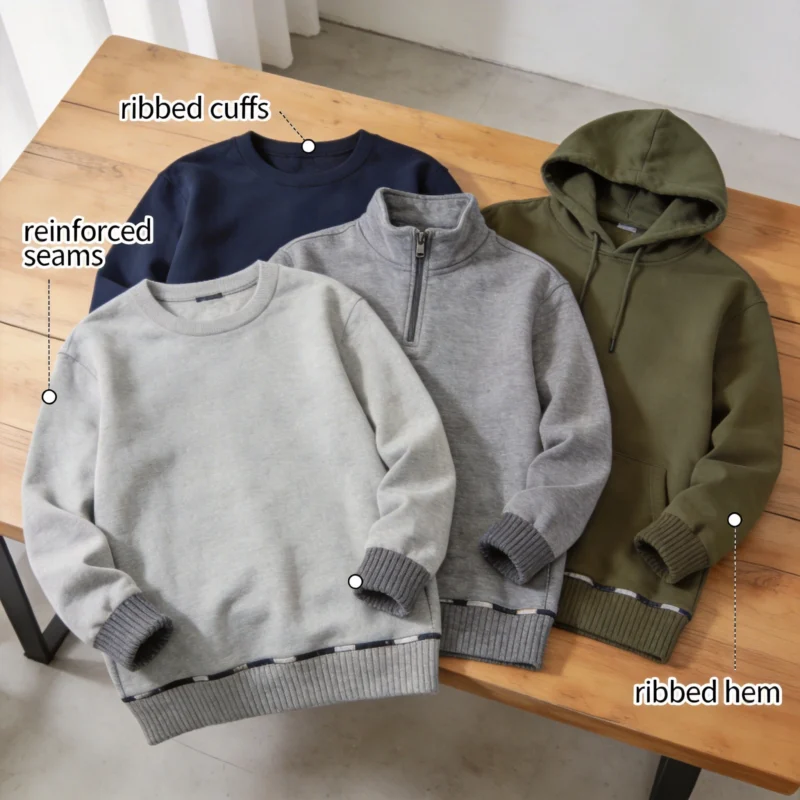
Before you focus on trends, it helps to understand the basic building blocks of a men’s sweatshirt. Ribbed cuffs and hem keep warmth in and shape intact, while well-placed seams prevent rubbing at the shoulders. When these fundamentals are right, you get a garment that feels comfortable and holds up to frequent wear.

A sweat shirt for men is typically a long‑sleeve, knitted top made from cotton or cotton‑blend fleece, designed for warmth and casual wear. Unlike woven shirts, the knit structure stretches with movement, which is why sweatshirts feel forgiving. Most have ribbed cuffs and hems to trap heat, and a brushed interior for softness against skin.

Sweatshirt vs hoodie vs sweater

A sweatshirt usually has no hood, while a hoodie adds a drawstring hood and often a kangaroo pocket that increases bulk. Sweaters are generally made from yarns like wool, cotton, or acrylic and can be knitted in finer gauges, making them office‑friendly. Sweatshirts lean sportier, absorbing sweat better due to loopback or fleece interiors.

Key construction details to notice

Look at the neckline triangle stitch, side panels, and ribbing width. Classic athletic sweatshirts use V‑stitches and underarm gussets to manage stretching and sweat, which you’ll still see on brands like Champion Reverse Weave. Heavier 12–14 oz fabrics drape differently from 8–9 oz options, resisting wind better but feeling warmer indoors.
2

Fabric Types in a Sweat Shirt for Men: Fleece, French Terry, and More

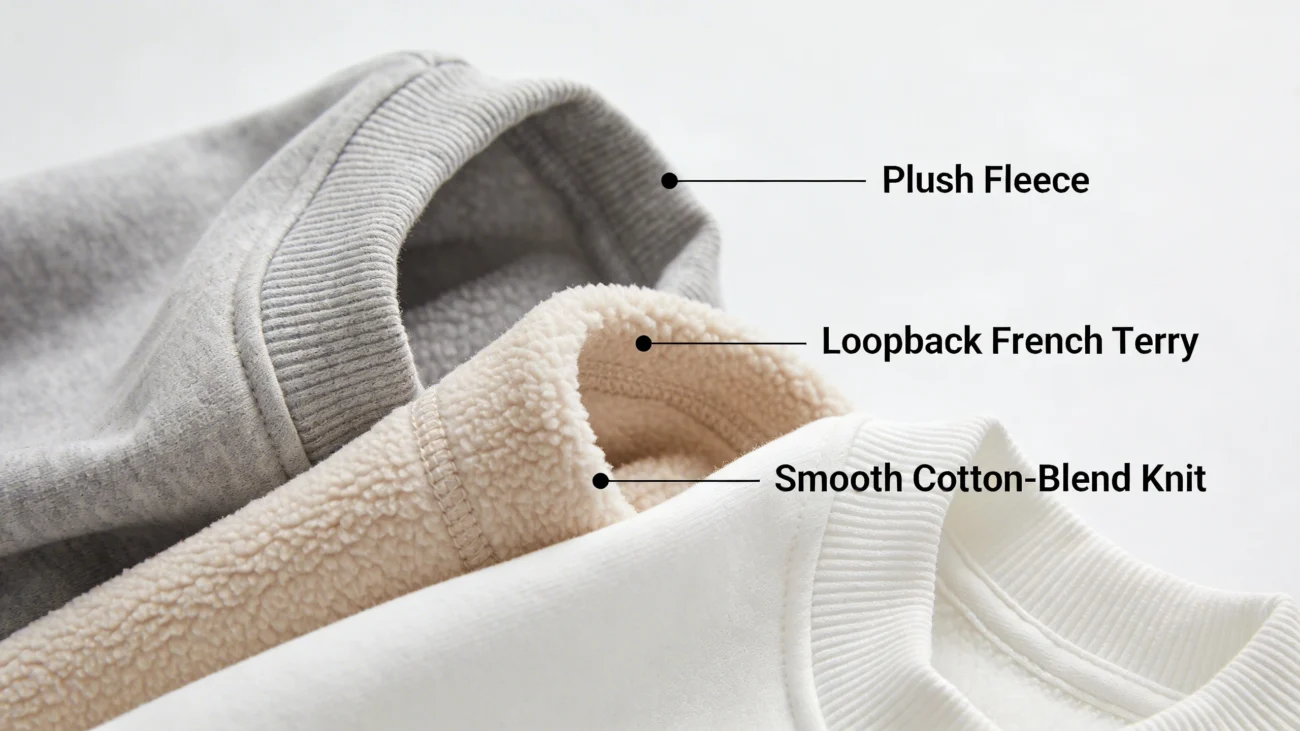
Fabric determines whether your sweat shirt for men feels cozy, breathable, or suffocating. Most everyday sweatshirts use cotton, polyester, or blends like 80/20 cotton‑poly. Cotton feels soft and breathable but can shrink 3–5% after washing. Polyester adds durability and faster drying, which matters if you sweat or launder pieces frequently.

Fabric Types in a Sweat Shirt for Men: Fleece, French Terry, and More

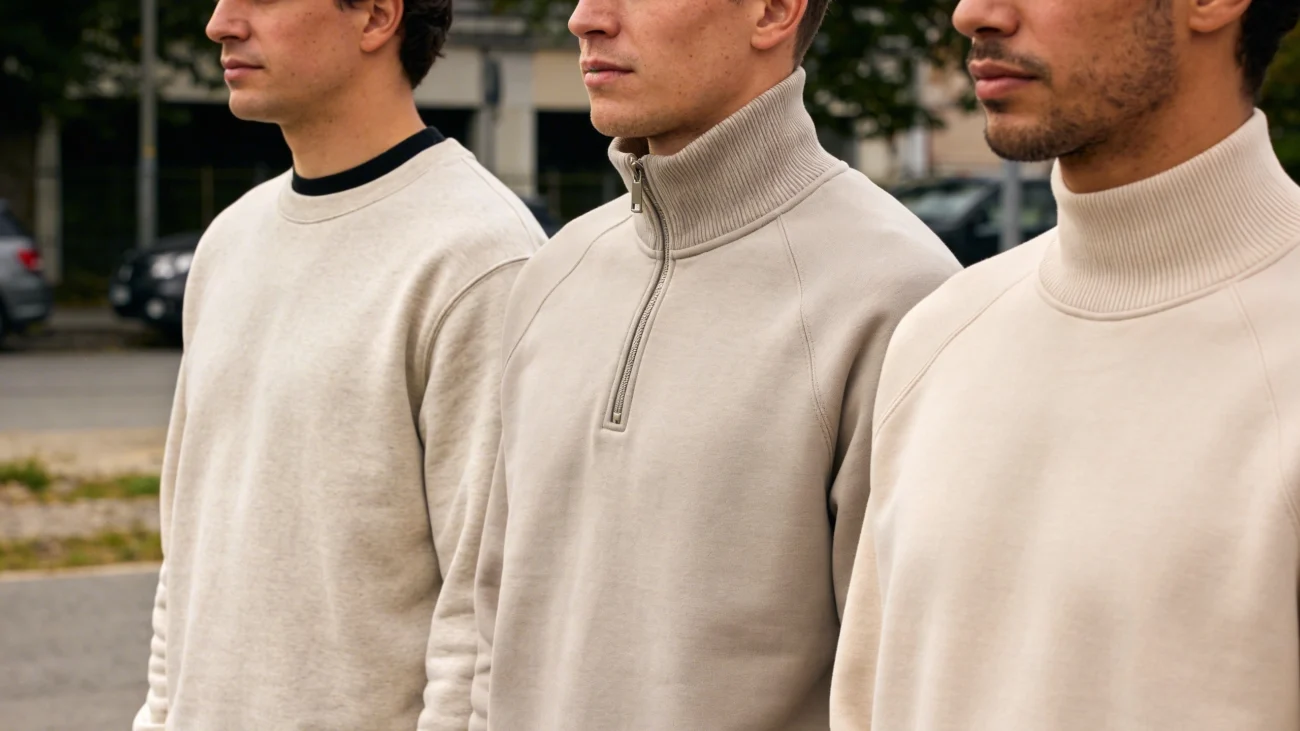
Neckline style subtly changes how a sweatshirt fits into your wardrobe. A crewneck is the classic, easygoing option that layers well under jackets. Half-zips offer adjustable ventilation and a sportier look, while mock necks add a cleaner, slightly more polished feel that works with tailored coats or smarter casual outfits.

Comparing common sweatshirt fabrics

The table below compares popular sweatshirt fabrics by warmth, breathability, and best use cases. These differences become obvious after wearing each for a full day, especially in changing weather or during commutes. Understanding their behavior helps you pick a single fabric that works across most of your weekly outfits.

Fabric TypeTypical Weight (oz/yd²)Warmth LevelBest Use CaseCommon Price Range (USD)
Cotton Fleece10–14High, traps heat efficientlyCold climates, winter layering under coats$40–$120 depending on brand
French Terry8–12Medium, breathable loopsIndoor wear, mild spring and fall days$35–$100 across retailers
Cotton‑Poly Blend9–13Medium‑high, dries fasterGym commutes, travel, frequent washing$30–$90 for most mainstream brands
Tech Fleece (Poly)7–10Medium, lightweight warmthActivewear, running, light rain resistance$60–$150 from sports labels
Heavyweight Loopback12–16High, wind‑resistantStreetwear, structured silhouettes, layering$80–$180 from premium makers
Organic Cotton Fleece9–12Medium‑high, soft handfeelEco‑conscious everyday basics$50–$140 from sustainable brands

For everyday wear, French terry works well if you run warm because its looped interior releases heat instead of trapping it. Fleece interiors, like on Nike Club Fleece or Uniqlo’s classic sweatshirts, feel plush but can overheat indoors. Blends are smart if you wash weekly, as they pill less and keep shape longer than 100% cotton.

3

How to Get the Right Fit in a Sweat Shirt for Men

How to Get the Right Fit in a Sweat Shirt for Men

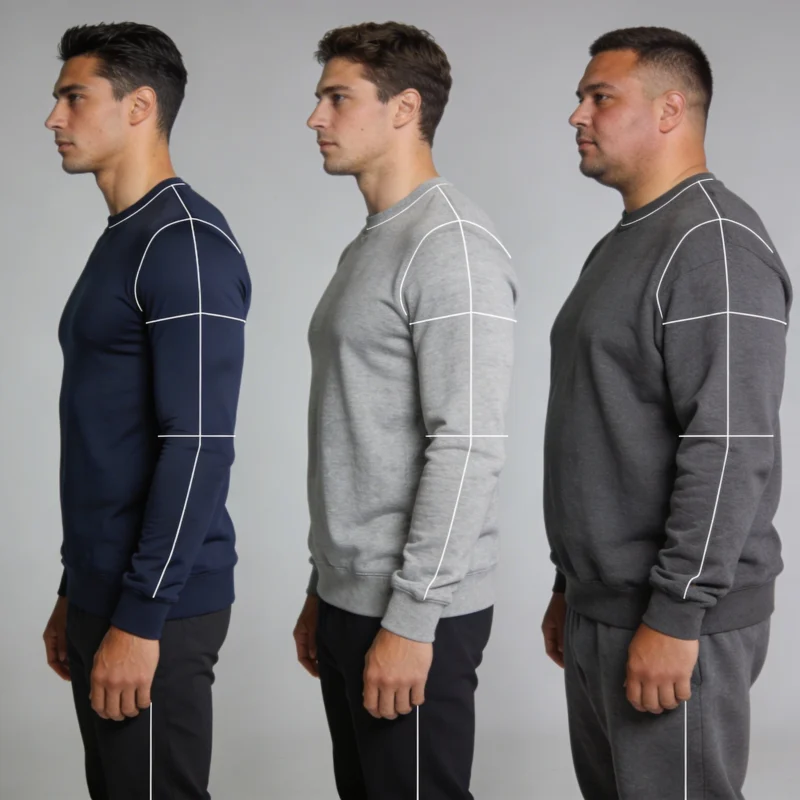
Getting the fit right means paying attention to how the sweatshirt sits on your shoulders, chest, and waist. Shoulder seams should line up with your shoulder bone, sleeves should reach just to the wrist bone, and the hem should hit around mid-fly. This balance avoids both clingy tightness and sloppy bulk.

Fit can make a $40 sweat shirt for men look like a $120 piece. The goal is a clean, relaxed silhouette that follows your body without clinging. Pay attention to shoulder seams, body length, sleeve taper, and hem tension. These four areas control whether the sweatshirt layers smoothly over T‑shirts and under jackets.

Key measurements to check

Shoulder seams should sit exactly where your shoulder bone ends, not halfway down your bicep. When seams drop more than 2–3 cm, the sweatshirt looks sloppy unless you’re intentionally going for an oversized streetwear style. Body length should end around mid‑fly on jeans, roughly covering 60–70% of your zipper length.

As a quick test, raise both arms straight overhead. If your waistband exposes more than 5–7 cm of T‑shirt or skin, the sweatshirt is too short for everyday wear. When sleeves bunch excessively at the wrist, more than two stacked folds, the overall proportion makes you appear shorter and bulkier than you are.

Choosing between regular, slim, and oversized fits

Regular fits from brands like Gap or H&M usually leave 5–8 cm of ease around the chest, which feels comfortable for most builds. Slim fits reduce this ease to about 3–5 cm, suiting leaner frames or men layering under tailored coats. Oversized cuts intentionally add 10–15 cm, working best with tapered pants to balance volume.

4

Neckline Styles in a Sweat Shirt: Crewneck vs Half-Zip vs Mock Neck

Neckline shapes change how formal or sporty a sweatshirt appears, even when fabric is identical. A classic crewneck is the most versatile, pairing with shirts, tees, or worn alone. Half‑zips and mock necks introduce vertical lines that can visually lengthen your torso, which helps if you’re shorter or broader‑chested.

Neckline Styles in a Sweat Shirt: Crewneck vs Half-Zip vs Mock Neck

Fabric choice dramatically changes how a sweatshirt feels in daily life. Fleece offers cozy warmth for colder climates or low-activity days, while French terry’s looped interior breathes better for walking commutes or indoor wear. Blended knits can balance softness, durability, and stretch, making them ideal for a versatile, all-season piece.

When to choose a crewneck sweatshirt

Crewnecks work almost everywhere because they mimic the neckline of basic T‑shirts. You can layer an Oxford shirt underneath, letting 1–2 cm of collar peek out for smart‑casual offices. At the same time, a plain crewneck in navy, black, or heather grey looks intentional with joggers, especially when the hem sits neatly at your hip.

Half‑zip and mock neck advantages

Half‑zips, like many golf or athleisure tops, give temperature control; unzipping 5–10 cm vents heat on commutes or indoors. Mock necks cover more of the neck without the bulk of a turtleneck, which pairs nicely with structured coats. Both styles look sharper than hoodies in business‑casual settings, particularly in solid, darker colors without large logos.

5

Styling a Sweat Shirt for Men with Jeans, Joggers, and Shorts

Styling a sweat shirt for men is about balancing proportions and textures so outfits feel deliberate, not lazy. Because sweatshirts are inherently casual, pairing them with slightly sharper pieces—dark denim, structured joggers, or tailored shorts—instantly upgrades the look. Small choices in footwear and layering can swing the outfit between athleisure, streetwear, and smart‑casual.

Styling a Sweat Shirt for Men with Jeans, Joggers, and Shorts

Easy outfit formulas to copy

Use a few reliable combinations that take under 30 seconds to assemble. By standardizing silhouettes, you reduce decision fatigue on busy mornings while still looking put‑together. The following outfit ideas rely on pieces many men already own, so you can test them before buying additional sweatshirts or bottoms.

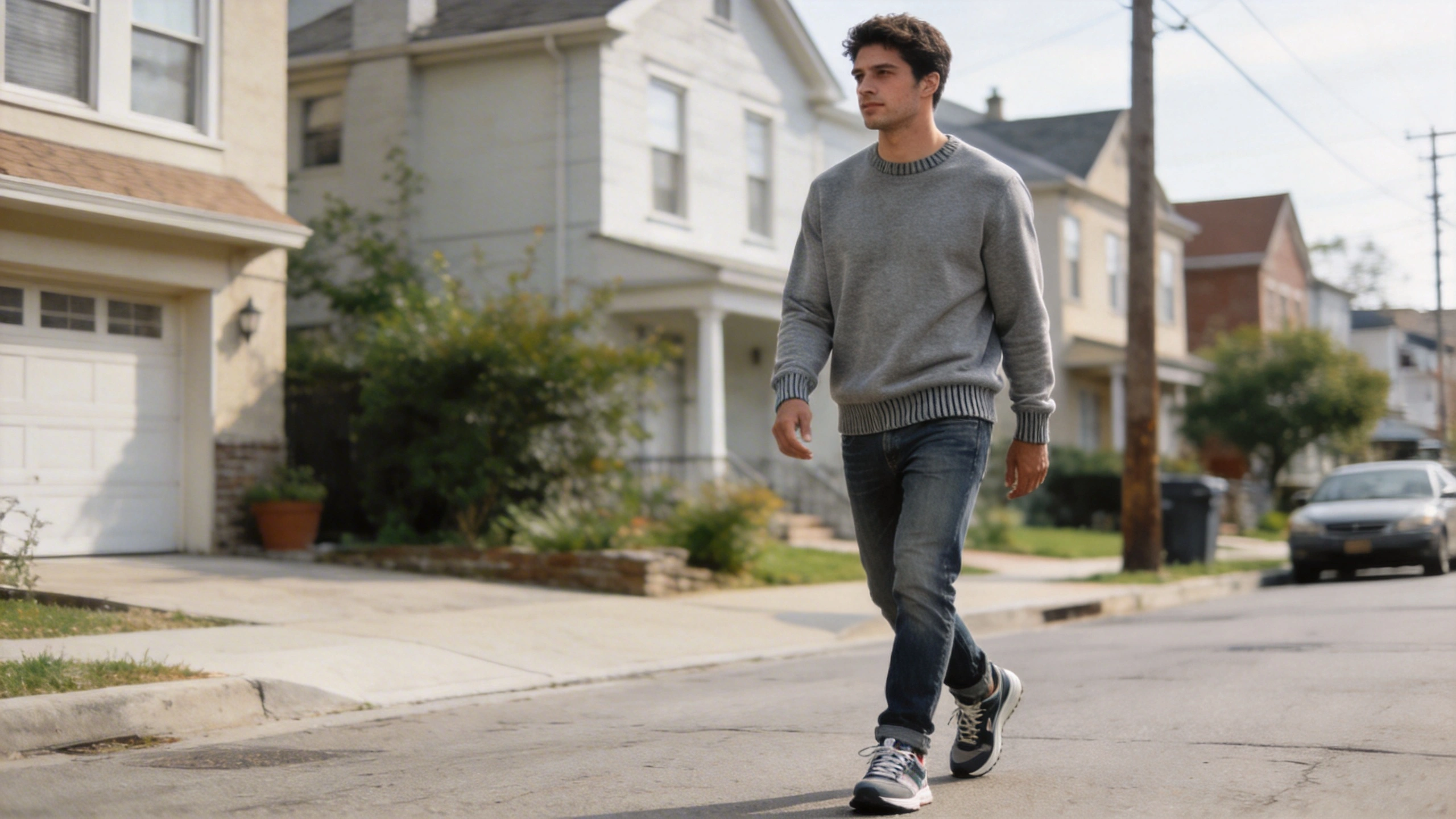
  • Grey crewneck, dark slim jeans, white leather sneakers, black watch; works for casual offices and weekend dinners.
  • Black sweatshirt, tapered black joggers, running shoes; add a bomber jacket for cold mornings or evening commutes.
  • Navy half‑zip, khaki chinos, brown suede chukkas; suitable for business‑casual environments without feeling overdressed.
  • Beige French terry sweatshirt, tailored navy shorts, minimal slip‑ons; ideal for 20–25°C days and beach town walks.
  • Graphic sweatshirt, light‑wash jeans, canvas high‑tops; keep accessories simple so the print remains the main focus.

When pairing sweatshirts with joggers, ensure at least one piece is structured—tapered legs or a neat neckline—so the outfit reads intentional, not like pajamas. Cuffing jeans once or twice to show 1–2 cm of sock also sharpens the look, especially with clean sneakers or boots.

6

Choosing the Right Weight of Sweat Shirt for Men by Season

The weight of a sweat shirt for men, usually listed in ounces per square yard, determines how it feels across different temperatures. Lightweight options around 7–9 oz suit indoor offices and mild springs, while heavyweight 12–16 oz pieces shine during windy commutes. Owning two or three distinct weights covers most climates without overcrowding your wardrobe.

Choosing the Right Weight of Sweat Shirt for Men by Season

Seasonal weight guide

Instead of grabbing random thicknesses, match sweatshirt weight to your average outdoor temperature and layering habits. The table below breaks down practical ranges, showing how each weight behaves during real‑world use. This helps prevent buying heavy fleece when you spend most days in heated buildings or cars.

Weight CategoryApprox. Fabric WeightIdeal Temperature RangeLayering SuggestionsTypical Use Scenario
Lightweight7–9 oz/yd²18–24°COver T‑shirt, under light jacketOffice AC, mild spring or early fall
Midweight9–11 oz/yd²12–20°CSolo wear or under denim jacketCity commutes, casual weekends
Heavyweight12–14 oz/yd²5–15°COver base layer, under parkaCold climates, evening walks
Extra Heavy14–16 oz/yd²0–10°CPrimary outer layerDry winter days, outdoor events
Tech Fleece7–10 oz/yd²8–18°CSolo or under windbreakerRunning, gym commutes, travel

If your climate swings widely, prioritize midweight French terry for maximum versatility. You can add a Uniqlo Ultra Light Down vest underneath coats for colder days while keeping the same sweatshirt. Heavyweight loopback styles from brands like Reigning Champ or Carhartt WIP suit men who spend long periods outdoors in colder regions.

7

Color and Graphic Choices in a Sweat Shirt for Men

Color and graphics decide how often you’ll actually wear a sweat shirt for men. Neutral shades—grey, navy, black, and oatmeal—integrate with most wardrobes and hide minor stains. Bolder hues and large prints feel fun but may clash with jackets or pants, making them better as occasional pieces rather than daily drivers.

Color and Graphic Choices in a Sweat Shirt for Men

Building a versatile color lineup

Start with one light neutral and one dark neutral. A heather grey sweatshirt pairs with blue jeans, olive chinos, or black joggers. A navy or black option works when you want a slightly sharper look, especially in cleaner fits. Once these bases are covered, add one accent color that complements your skin tone for variety.

When to choose logos or graphics

Small chest logos, like a 2–3 cm embroidery, add interest without dominating outfits, which suits work‑from‑home calls or casual Fridays. Large graphics or collegiate prints broadcast personality but limit versatility; they’re perfect for weekends, concerts, or game days. If you own fewer than four sweatshirts total, prioritize plain or minimally branded designs first.

8

Care Tips to Keep Your Sweat Shirt for Men Soft and Fresh

Care Tips to Keep Your Sweat Shirt for Men Soft and Fresh

Proper care extends the life of a sweat shirt for men by years, preserving softness, shape, and color. Cotton fibers degrade faster when exposed to high heat and aggressive detergents, leading to thinning elbows and faded logos. A simple routine—cool washes, gentle spin cycles, and air‑drying—keeps mid‑range sweatshirts looking premium longer.

Washing and drying best practices

Turn sweatshirts inside out before washing to reduce friction on the outer surface and prevent pilling. Use cold water, around 20–30°C, with a mild detergent, avoiding bleach that can weaken fibers. Spin on a gentle cycle to limit stretching at the neck and cuffs, then reshape and lay flat or hang over a wide hanger to dry.

  • Wash every three to four wears unless heavily soiled; overwashing fades color and wears down brushed interiors.
  • Avoid tumble drying on high heat; use low or air‑dry to prevent 3–5% shrinkage and twisted side seams.
  • Store folded instead of hanging heavy pieces to stop shoulders stretching and permanent hanger bumps forming.
  • Use a fabric shaver on pills around sleeves and sides; remove gently to avoid thinning the fabric surface.
  • Spot‑clean stains quickly with diluted detergent; waiting hours lets pigments set deeper into cotton fibers.

Think of each wash as slightly “spending” the sweatshirt’s lifespan. By lowering wash frequency and heat, you effectively double the number of comfortable wears, turning a $60 purchase into a cost‑per‑wear of cents rather than dollars over several seasons.

For premium pieces, consider air‑drying flat on a rack and rotating wear across two or three favorites. This rotation gives elastic fibers in cuffs and hems time to recover, maintaining their snap. When traveling, pack sweatshirts in breathable garment bags instead of plastic, which traps moisture and can cause musty odors over long trips.