Men’s Sweater Style Guide: How to Choose the Right Sweater for Every Outfit

A couple of well-chosen sweaters can replace a crowded closet of random tops. With the right style, fabric, and fit, one sweater can move from weekend coffee to client meeting simply by changing what you wear around it.

A men’s sweater is more than a cold-weather basic; it is a flexible layer that shapes how polished or relaxed your outfit feels. Choosing the right neckline, thickness, and color lets you dress the same sweater down with jeans or up with tailored trousers. Understanding these details stops impulse buying and builds a smaller, sharper wardrobe.

Instead of chasing trends, focus on core silhouettes, reliable fabrics, and fits that suit your build. When you know which sweaters flatter your shoulders, work with your climate, and coordinate with existing pieces, every purchase earns its place. This guide walks through styles, materials, outfits, and care so each sweater works harder.

By the end, you will know exactly which two or three sweaters cover most situations: relaxed weekends, smart-casual offices, and in-between events like dates or dinners. You will also understand how to layer them from early fall to spring, and how to wash and store them so they last more than a single season.

1
sweater

Men’s Sweater Basics: Key Styles and When to Wear Each Sweater

Men’s Sweater Basics: Key Styles and When to Wear Each Sweater

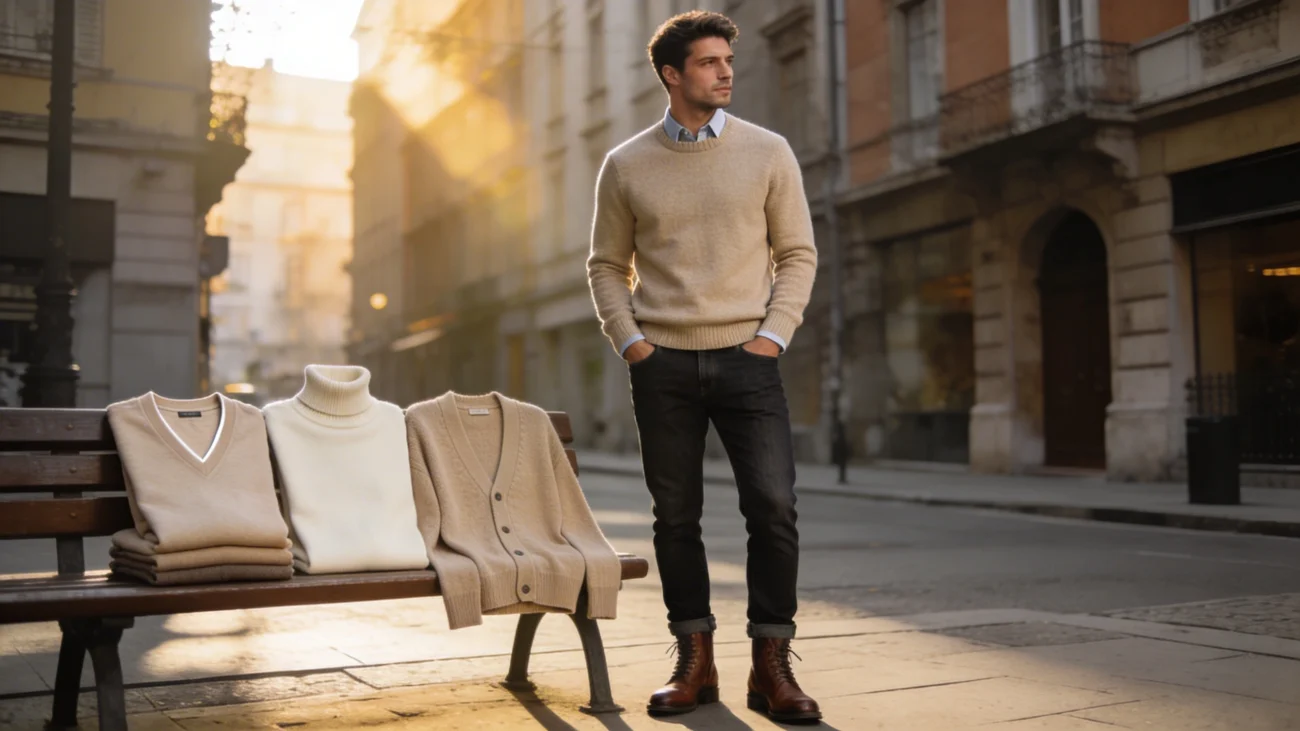
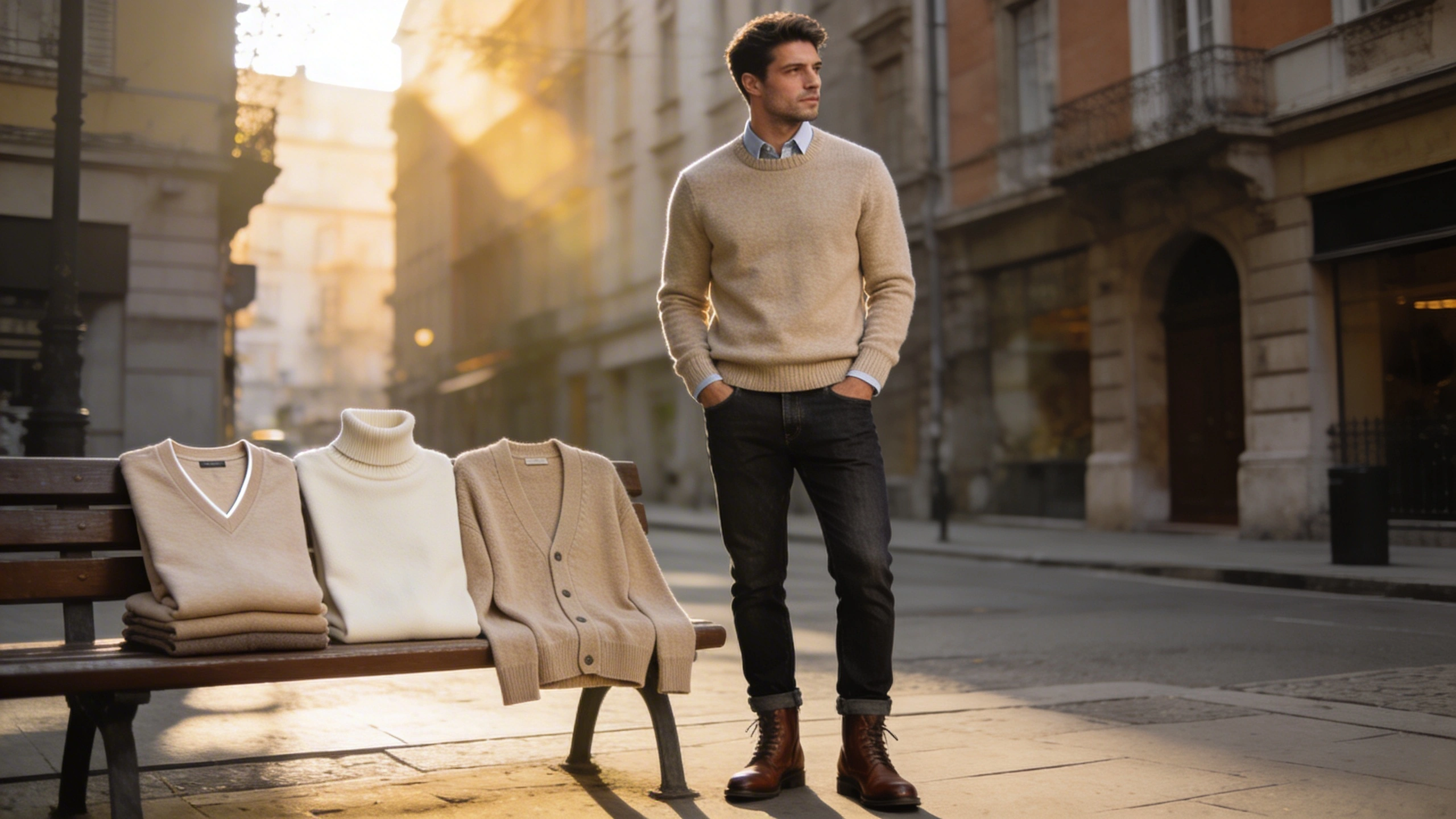
Understanding the main sweater styles helps you pick the right option for each occasion. A crew neck is your everyday workhorse, a V-neck layers neatly over shirts and ties, a turtleneck adds sharp sophistication, and a cardigan offers easy on-off versatility, especially useful when you’re moving between different temperatures throughout the day.

Different sweater styles send different signals, even before anyone notices the fabric or color. Neckline shape, closure, and collar height all change how formal you look. Knowing the casual-to-dressy spectrum helps you decide whether a crewneck or cardigan better fits a specific day, from working at home to presenting in a meeting.

Crewneck, V-Neck, and Turtleneck

Crewneck sweaters sit at the base of the neck and lean casual, especially in textured knits or heathered colors. They pair naturally with T-shirts and jeans, but a fine-gauge merino crewneck over an oxford shirt can still look office-ready. V-necks expose more shirt and tie, so they are ideal for business-casual offices where you still want a visible collar.

Cardigan and Half-Zip Sweaters

Cardigans open down the front, functioning like a softer blazer. A slim, dark cardigan over a button-down can replace a jacket in relaxed offices, while chunkier shawl-collar versions suit weekends with boots and denim. Half-zips bridge sporty and smart; in smooth merino or cotton, they layer over shirts at the office or over T-shirts with chinos on flights.

2

Choosing the Right Sweater Fabric for Men: Wool, Cotton, and Blends

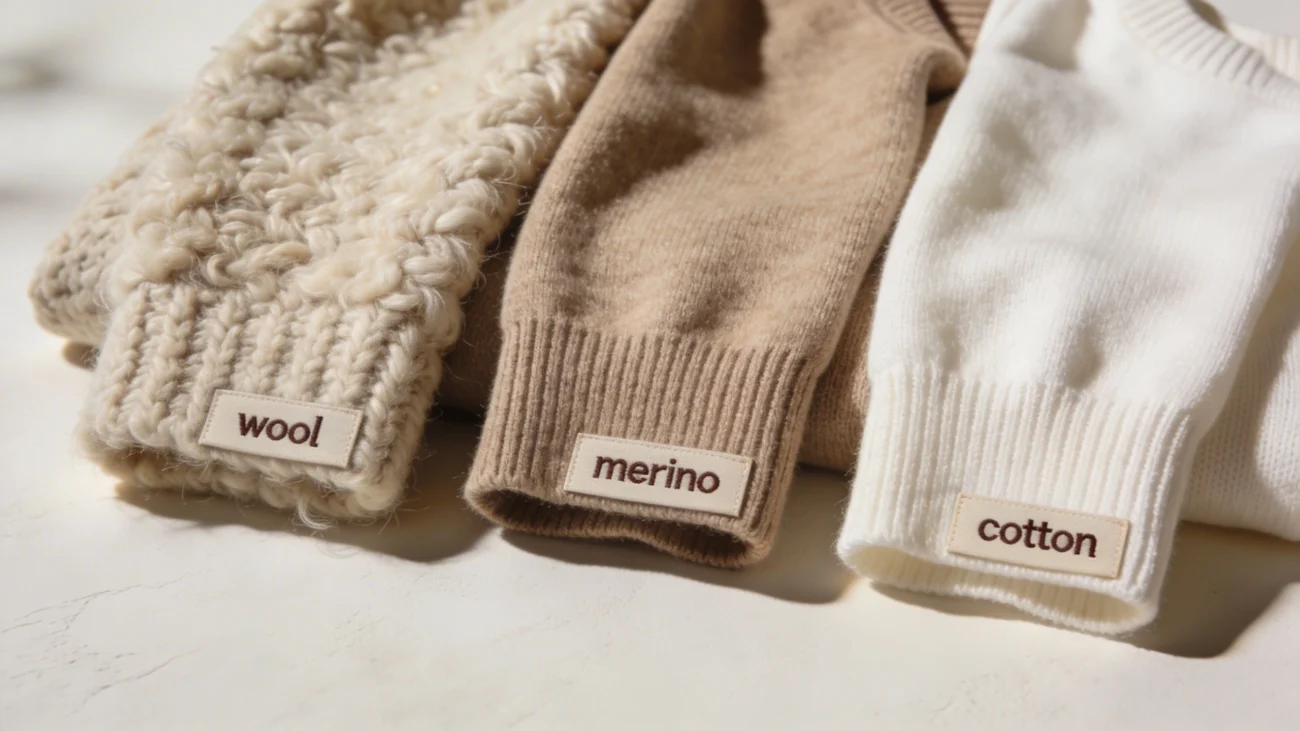
Fabric determines warmth, breathability, and how your sweater drapes on the body. Two sweaters can look similar on a hanger but feel completely different after eight hours of wear. Understanding how wool, cotton, cashmere, and synthetic blends behave helps you choose pieces that match your climate and layering needs, not just their color.

Choosing the Right Sweater Fabric for Men: Wool, Cotton, and Blends

For everyday outfits, treat your sweater like a reliable anchor piece. A simple navy or grey crew neck pairs effortlessly with jeans, chinos, or sneakers, and layers smoothly under casual jackets. By keeping the sweater clean and neutral, you can rotate different shoes and outerwear while still looking put-together with minimal effort.

Comparing Common Sweater Materials

Natural fibers like wool and cotton manage temperature better than pure synthetics because their fibers hold and release moisture gradually. Merino wool around 18–19 microns feels soft enough for bare skin and insulates even when slightly damp, making it ideal for commuters. Cotton sweaters breathe well but trap less heat, so they suit heated offices or mild winters rather than freezing conditions.

Fabric TypeTypical Weight (g/m²)Warmth LevelAverage Price RangeBest Use Case
Merino Wool180–260High for weight$70–$180Office layering, travel, cool-to-cold climates
Lambswool300–450Very high$80–$200Casual winter wear, heavy layering
Cotton Knit220–320Moderate$40–$120Mild winters, heated offices, spring
Cashmere180–260High, very soft$120–$350Dressy outfits, lightweight warmth
Wool-Blend (with Nylon)220–350High$60–$150Durable everyday wear, commuters
Cotton-Poly Blend200–280Low-to-moderate$30–$90Budget options, easy care

Blends add durability and wrinkle resistance without drastically changing how a sweater feels. For example, a 90% merino and 10% nylon sweater usually pills less and survives more washes than pure wool. If you run warm, choose lighter weights under 250 g/m² and avoid brushed or fuzzy textures, which trap more air and raise perceived warmth indoors.

3

How to Pick the Perfect Sweater Fit for Your Body Type

How to Pick the Perfect Sweater Fit for Your Body Type

Fit matters more than any trend when it comes to sweaters. The right knit should follow your shape without pulling at the shoulders, billowing at the waist, or bunching at the sleeves. Matching sweater thickness and length to your build creates a cleaner line and instantly makes even casual outfits look more intentional.

Fit makes a bigger difference than fabric price when it comes to looking sharp. A $70 sweater with clean shoulder seams and the right length will flatter more than a $250 cashmere piece that bags at the waist. Paying attention to three measurements—shoulders, sleeves, and body length—ensures the sweater follows your frame instead of hiding it.

Shoulders, Sleeves, and Length

Shoulder seams should end exactly where your shoulder bone drops off; seams falling 2–3 centimeters down the arm create a slouchy, unintended look. Sleeves should stop at the wrist bone, allowing 0.5–1 centimeter of shirt cuff to peek out if you layer. Body length ideally covers your waistband and ends mid-fly, avoiding both crop-top and tunic territory.

Adjusting Fit for Different Builds

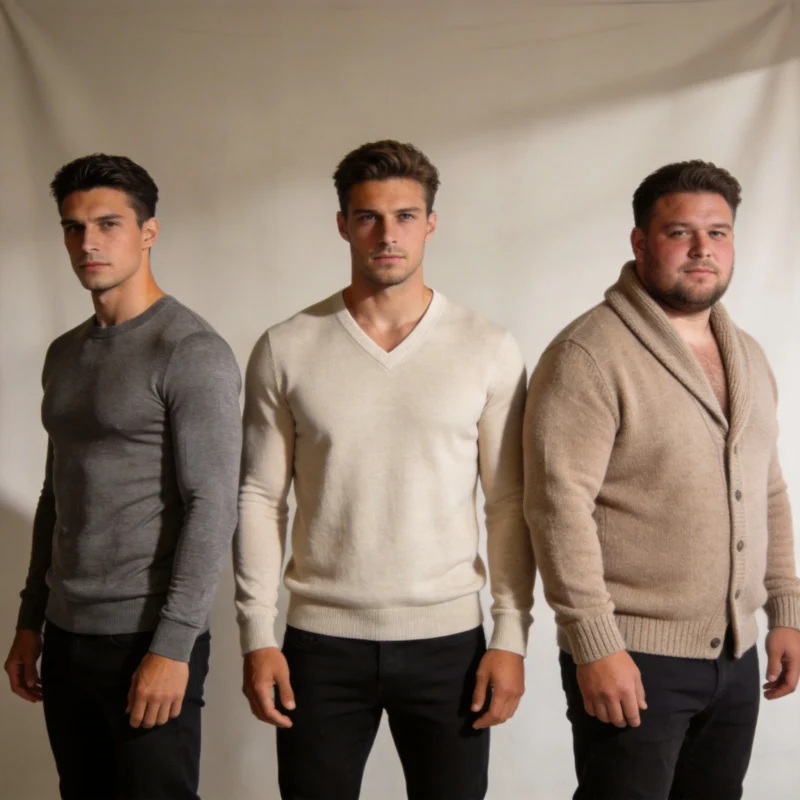
Broader chests and athletic builds often benefit from raglan sleeves or set-in sleeves with a little extra room through the upper back. If you are slimmer, choose finer-gauge knits around 14–16 gauge, which sit closer to the body without bulk. Heavier builds usually look better in mid-gauge sweaters that skim rather than cling, avoiding tight ribbing at the hem that emphasizes the stomach.

4
men’s sweater

Building Casual Outfits with a Men’s Sweater and Everyday Staples

Casual outfits rely on easy combinations you can repeat weekly without looking identical. A well-chosen men’s sweater turns basic jeans, chinos, and sneakers into something intentional rather than random. By varying textures and footwear, you can wear the same crewneck three times a week and still feel like you changed your look meaningfully.

Building Casual Outfits with a Men’s Sweater and Everyday Staples

Fabric choice dramatically changes how a sweater looks and feels. Chunky lambswool traps heat and suits colder climates, while fine merino offers warmth with a sleeker profile under jackets. Cotton and cotton blends breathe better, making them ideal for mild weather or indoor offices where heavier knits would feel too warm.

Reliable Casual Combinations

Start with a midweight crewneck in navy, charcoal, or oatmeal, which pairs with blue and black denim equally well. Slim-straight jeans with a 15–16 inch leg opening keep proportions balanced above sneakers or boots. Add white leather sneakers for a clean, modern feel or brown suede chukkas for slightly more polish. Roll the sleeves once to show a watch and break up solid color blocks.

  • Pair a grey crewneck with dark indigo jeans and white sneakers for a simple, three-piece uniform you can repeat.
  • Combine an olive cotton sweater with tan chinos and desert boots for a relaxed weekend look that still photographs well.
  • Layer a navy cardigan over a plain white T-shirt and black jeans, then add Chelsea boots for casual evenings out.
  • Wear a textured lambswool sweater with faded jeans and rugged leather boots for cold-weather errands or outdoor meetups.
  • Use a striped Breton-style sweater with slim chinos and canvas sneakers to add interest without loud colors or graphics.
5

Smart-Casual and Office Looks: Dressing Up a Sweater for Men

Smart-casual dressing lives between full tailoring and weekend denim, and sweaters are perfect for that middle ground. Fine-gauge knits behave almost like soft tailoring when layered over shirts and under blazers. Choosing the right thickness lets you slide a sweater into office outfits without creating bulk around the shoulders or making jackets sit awkwardly.

Smart-Casual and Office Looks: Dressing Up a Sweater for Men

Layering with Shirts and Trousers

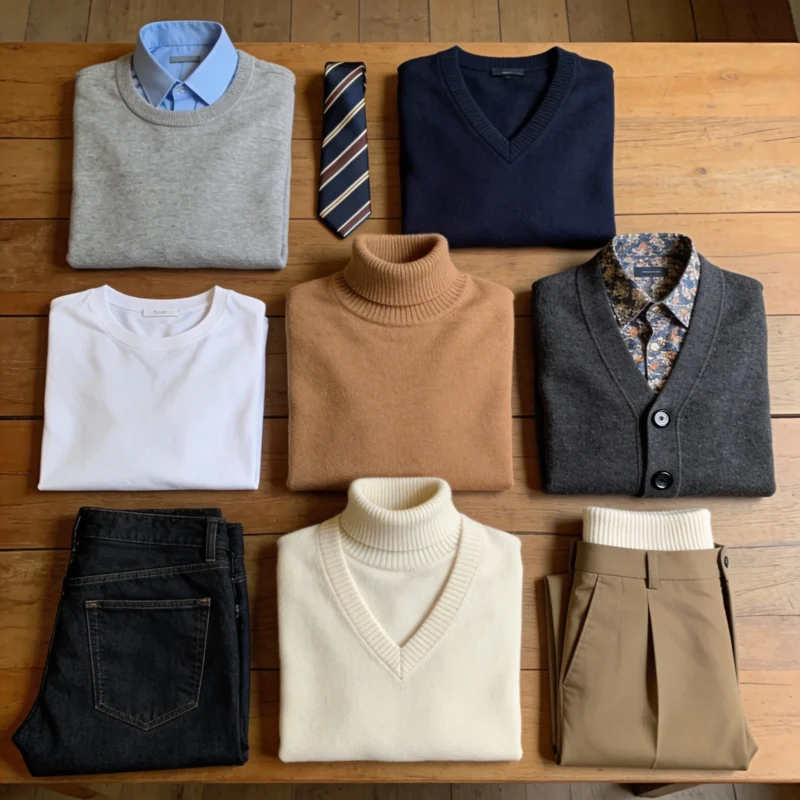
For business-casual offices, a 14–16 gauge merino V-neck over an oxford shirt keeps you polished while avoiding a full suit. Stick to solid colors like navy, charcoal, or forest green, which complement grey or navy trousers. If you wear a tie, the V-neck exposes the knot cleanly; without a tie, an open collar sits comfortably beneath the neckline without bunching.

Think of a fine-gauge sweater as a softer blazer: it sharpens a shirt-and-trouser combination, adds warmth, and still lets you remove layers easily if a meeting room overheats.

Using Blazers and Coats with Sweaters

When adding a blazer, avoid chunky knits thicker than about 3–4 millimeters, which push the jacket’s lapels outward. A slim crewneck in merino under an unstructured blazer creates a modern, suit-free office look when paired with wool trousers and leather derbies. For dates, swap trousers for dark jeans and choose suede loafers or Chelsea boots to keep the outfit relaxed but intentional.

6

Layering a Sweater Through the Seasons: From Fall to Early Spring

Layering a Sweater Through the Seasons: From Fall to Early Spring

Layering lets the same sweater work from chilly October mornings to unpredictable April afternoons. Instead of buying separate heavy and light pieces, you can combine a midweight sweater with different base and outer layers. Paying attention to fabric thickness, collar height, and jacket style keeps you warm without feeling like you are wearing armor indoors.

Temperature-Based Layering Strategies

In early fall, a cotton or lightweight merino sweater over a T-shirt handles 15–20°C days comfortably. As temperatures drop below 10°C, swap the T-shirt for an oxford shirt and add a midweight jacket like a field coat or bomber. In near-freezing weather, a merino base layer, thicker crewneck, and wool overcoat trap more air without adding stiff bulk.

  • Use a cotton crewneck over a long-sleeve tee under a denim jacket for 12–18°C transitional days and evening walks.
  • Wear a merino turtleneck beneath a tailored overcoat around 5–10°C for wind protection without needing a separate scarf.
  • Combine a half-zip sweater with a quilted vest and flannel shirt for active days around 0–8°C, like city errands.
  • Layer a cardigan between your shirt and blazer so you can remove one piece if offices or trains feel overheated.
  • Switch to lighter-gauge knits in spring while keeping darker outerwear, easing visually from winter into warmer months.
7
men’s sweaters

Color and Pattern Rules for Men’s Sweaters That Always Work

Color choices determine how easily your sweaters mix with the rest of your wardrobe. A tight palette means you can reach for any piece without worrying about clashing tones. Focusing on neutrals and subtle patterns builds a foundation where each new sweater multiplies outfit options instead of becoming a one-outfit novelty that rarely leaves the drawer.

Color and Pattern Rules for Men’s Sweaters That Always Work

Building a Versatile Sweater Color Palette

Start with two or three neutral colors: navy, charcoal, and light grey work with almost every trouser shade. Navy pairs with tan, olive, grey, and denim, while grey sits comfortably with black and blue. Once those bases are covered, add one earthy tone like camel, olive, or burgundy, which brings warmth without shouting. Keep bright colors for occasional pieces, not everyday workhorses.

If you can wear a sweater with at least four different bottoms you already own—jeans, chinos, and trousers—it earns a permanent spot in your rotation.

Patterns, Textures, and Safe Experiments

Subtle textures like ribbed knits, seed stitch, or cable patterns add depth while staying easy to match. Limit bold patterns, such as large Fair Isle designs, to one sweater so they feel special rather than overwhelming. When trying stripes or color-blocking, keep the colors within your existing palette—navy and cream stripes, for example—so the piece still works with your usual jeans and chinos.

8

Sweater Care 101: Washing, Drying, and Storing Your Sweater Properly

Sweater Care 101: Washing, Drying, and Storing Your Sweater Properly

Proper care easily doubles the lifespan of a favorite sweater, which matters when quality pieces cost $80–$200 each. Heat, friction, and stretching are the main enemies; controlling those three factors prevents shrinking, pilling, and warped shoulders. A simple routine—gentle washing, flat drying, and careful storage—keeps sweaters looking sharp instead of tired and fuzzy after one season.

Washing and Drying Without Damage

Most wool and cashmere sweaters should be hand-washed in lukewarm water around 30°C with a wool-specific detergent. Gently press, rather than wring, to remove excess water, then roll in a towel to absorb moisture. Lay the sweater flat on a drying rack, reshaping the shoulders and hem; hanging it wet stretches the fabric and can add several unwanted centimeters to the length.

De-Pilling and Storing Between Seasons

Pilling happens where fibers rub, usually under arms or against bag straps, and does not mean the sweater is ruined. Use a sweater comb or fabric shaver every 5–10 wears to remove pills without cutting the knit. For off-season storage, fold sweaters and place them in breathable cotton bags with cedar blocks; avoid plastic bins, which trap moisture and can encourage mildew or moth damage.

Small habits make expensive knits feel like long-term investments rather than fragile luxuries. Rotate sweaters so each one rests between wears, just like quality shoes. If a sweater gets heavily stretched at the cuffs or hem, gently steam it and reshape while warm. Over years, this routine preserves color, prevents distortion, and keeps your core sweater lineup ready for any outfit you build.