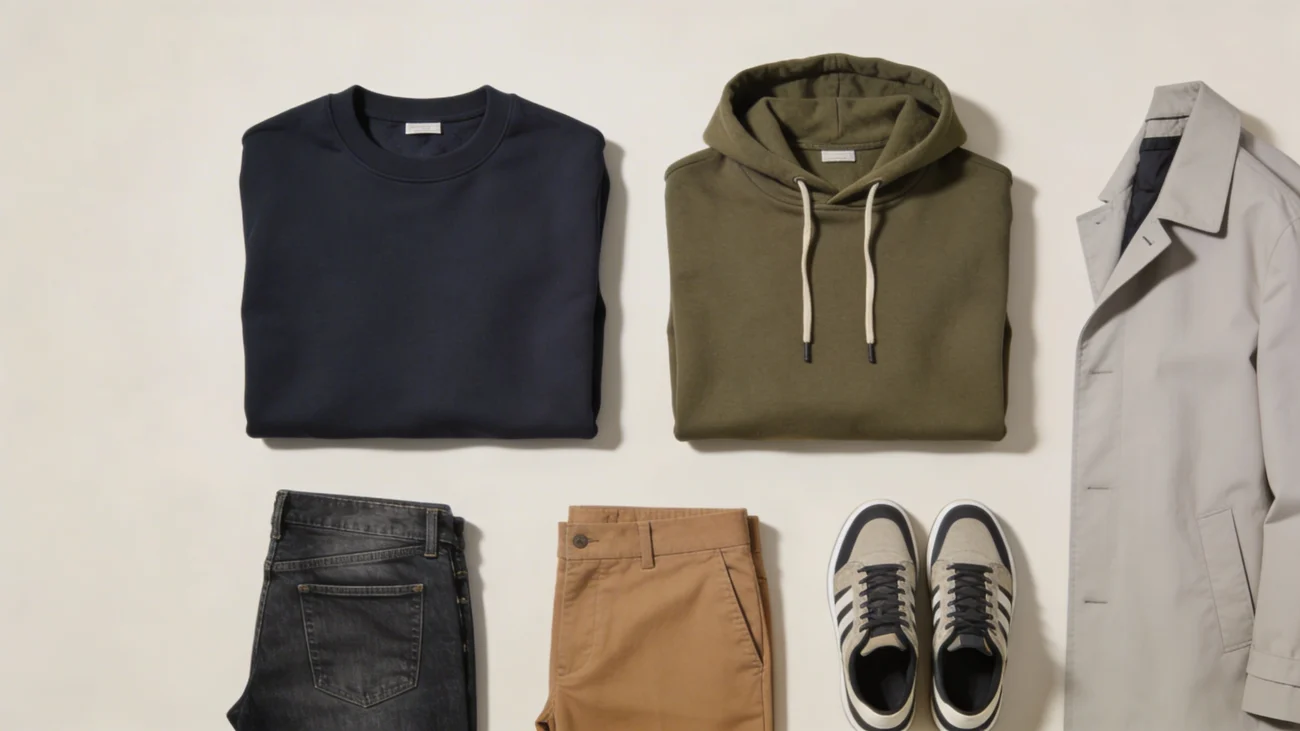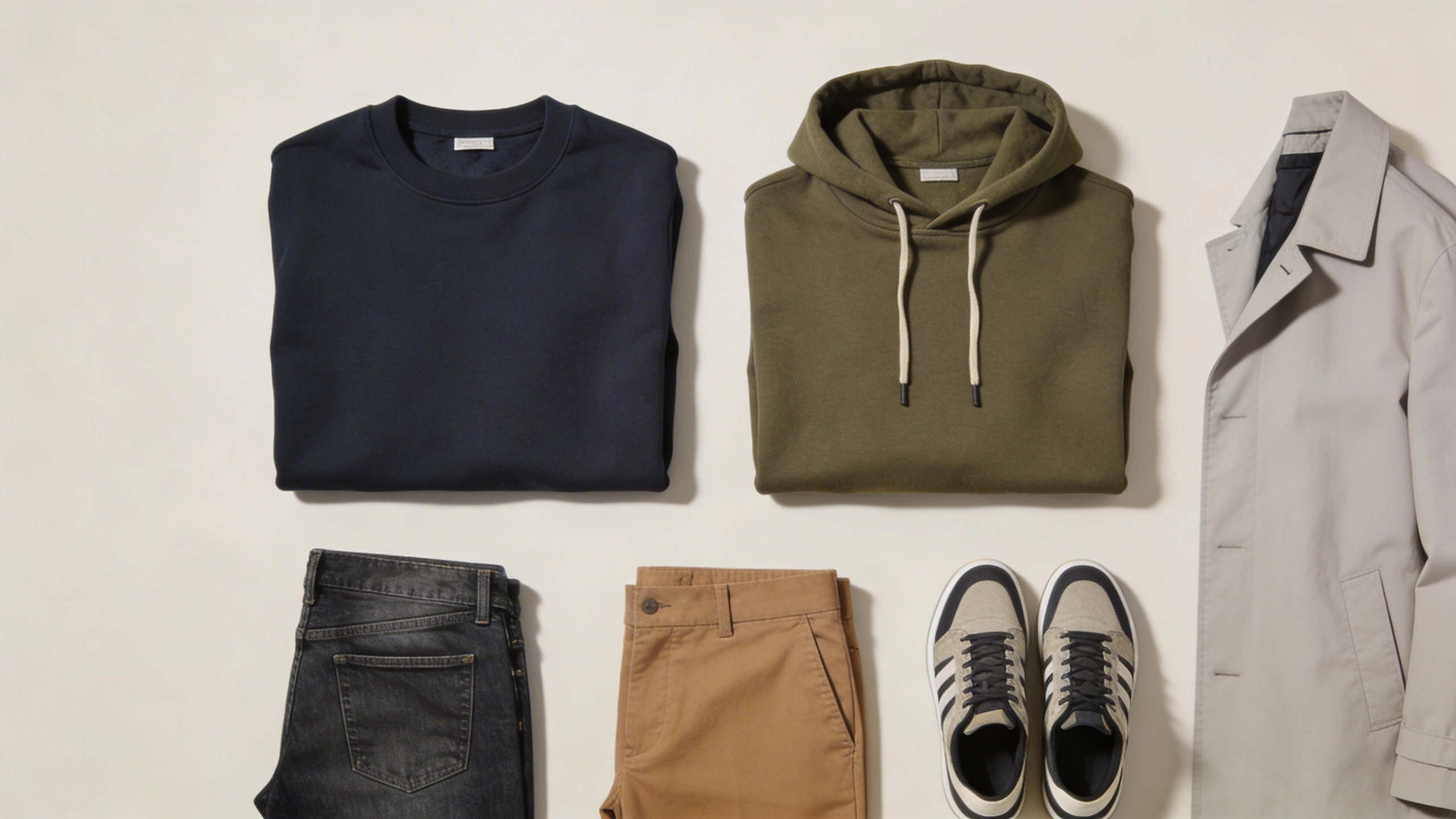
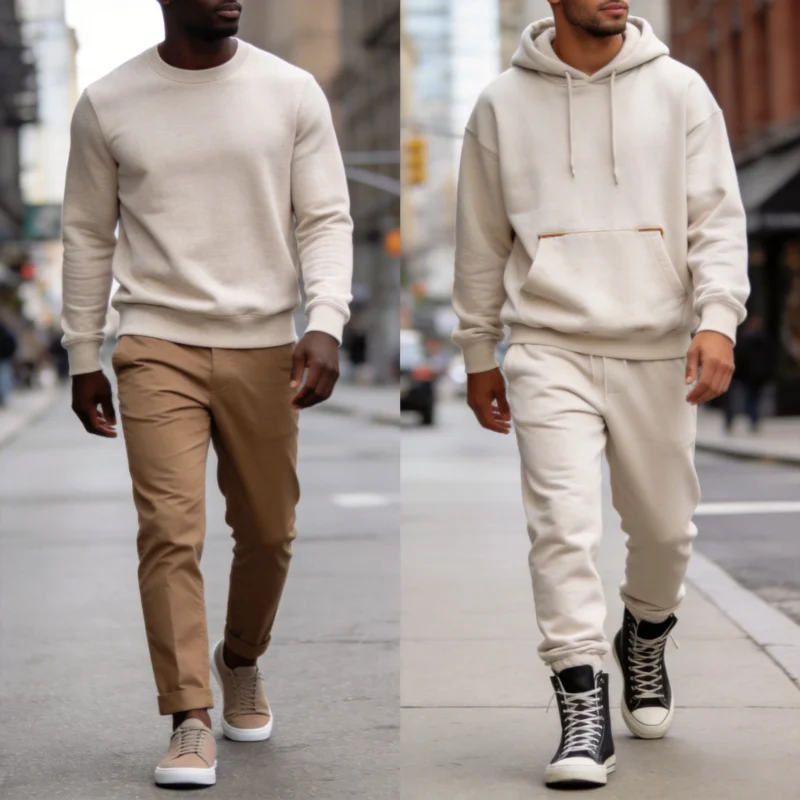
Seeing a sweatshirt and hoodie styled on real people highlights how each piece behaves in an outfit. The crewneck’s open neckline and cleaner front make it feel sharper with chinos, while the hoodie’s bulk, pocket, and drawstrings push the look toward streetwear and athleisure, even when colors and fabrics are similar.
Both sweat shirts and hoodies evolved from early 20th‑century athletic wear, but subtle design differences shape how men wear them today. A classic sweat shirt is usually a crewneck, long‑sleeve top made from 280–350 gsm cotton fleece or loopback jersey, with ribbed cuffs and hem. A hoodie adds a drawstring hood and usually a kangaroo or split pocket, immediately signaling a sportier, more relaxed attitude.
Key Design Features and Fabric Choices
Most men’s sweat shirts use mid‑weight cotton blends, often 80% cotton and 20% polyester, balancing softness with durability after 50–60 washes. Hoodies often run slightly heavier, sometimes 320–380 gsm, because the hood and pocket add bulk and require structure. Details like V‑inserts at the neck, side panels, and raglan sleeves on sweat shirts create a cleaner silhouette that layers smoothly under denim jackets, topcoats, or chore coats.
Typical Styling in Everyday Men’s Outfits
Men often style sweat shirts with straight or slim jeans, chino trousers, or tailored joggers when they want casual comfort without looking underdressed. A grey or navy sweat shirt over an Oxford shirt can pass in business‑casual offices where hoodies feel too informal. Hoodies, by contrast, pair naturally with cargo pants, athletic shorts, or relaxed denim, aligning with skate, techwear, and athleisure aesthetics that emphasize comfort and attitude.