Sweater for Men Style Guide: From Casual to Smart Layers

A well-chosen sweater can replace a jacket, sharpen a shirt, or dress up basic jeans in seconds. Understanding a few rules about fit, fabric, and layering turns this simple piece into a reliable style tool all year.

A versatile sweater for men works across relaxed weekends, business-casual offices, and evenings out when you treat it like a structured mid-layer, not just loungewear. Paying attention to neckline shape, shoulder seams, and fabric weight helps you decide whether a sweater belongs with sneakers and denim or tailored trousers and leather shoes.

Instead of buying multiple trendy pieces every season, focus on three or four reliable sweaters that handle most situations. Neutral colors like navy, charcoal, and camel pair with 70–80% of typical wardrobes. Once you understand how each type behaves under jackets and over shirts, you can build outfits quickly without staring at your closet every morning.

Layering is where a sweater for men really earns its place. A thin merino crew under a blazer adds roughly one extra insulation layer without bulk, while a heavier cable knit can replace a light jacket at 10–15°C. Mastering these combinations lets you adjust to changing weather and dress codes simply by swapping one sweater.

1
sweater for men

Types of Sweater for Men: Crew, V-Neck, Turtleneck and More

Types of Sweater for Men: Crew, V-Neck, Turtleneck and More

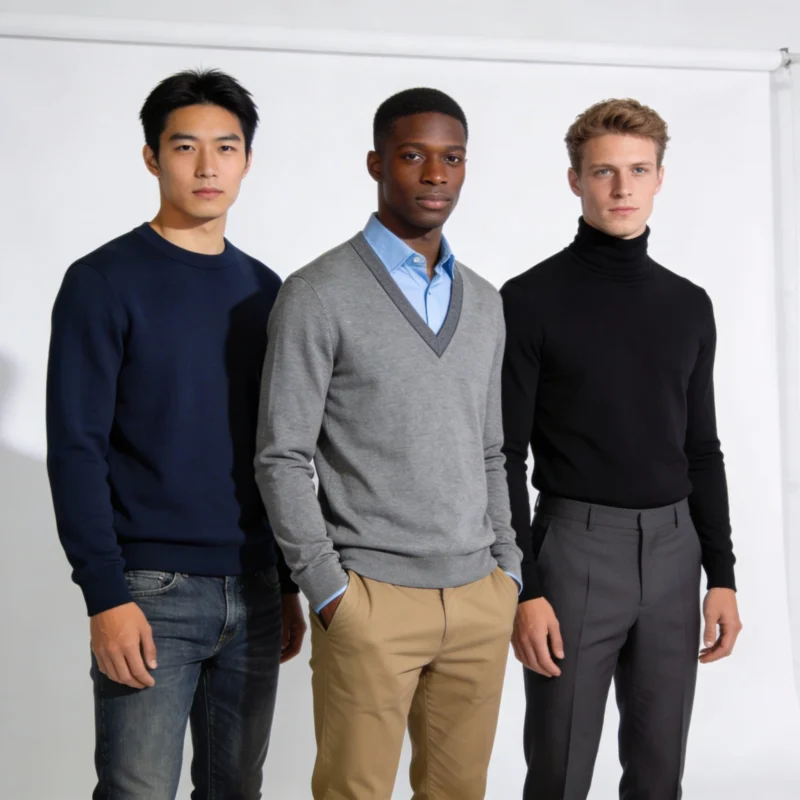
Understanding the main types of sweater for men makes outfit planning far easier. A classic crew neck works almost anywhere, a V-neck layers neatly over collared shirts, and a sleek turtleneck instantly looks more refined. Each neckline changes how the sweater frames your face and interacts with jackets and shirts underneath.

Different necklines dramatically change how formal a sweater feels and what you can layer underneath. Choosing between crew, V-neck, turtleneck, quarter-zip, and cardigan styles depends on your face shape, neck length, and how often you wear collared shirts. Owning two or three complementary types covers most casual and smart-casual situations without feeling repetitive.

Crew Neck and V-Neck Essentials

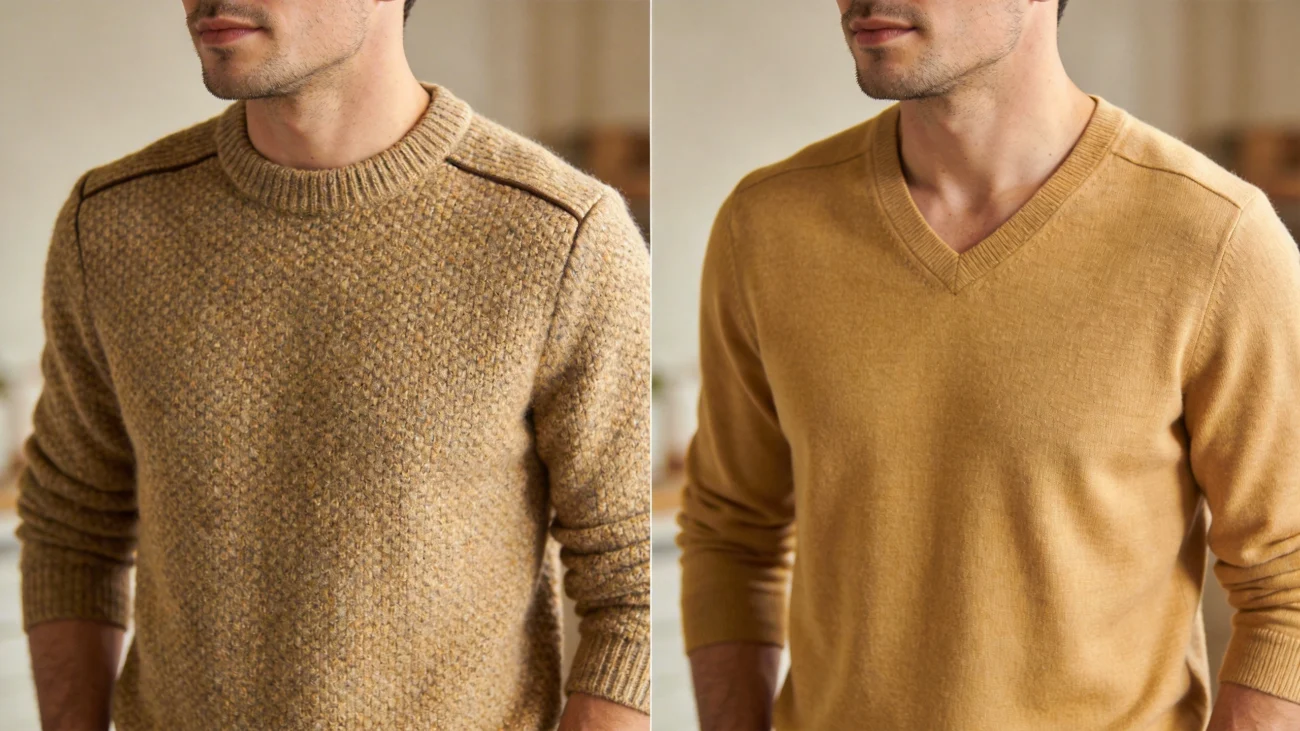
Crew necks are the most versatile sweater for men because the round neckline frames the face cleanly and hides undershirts. They pair easily with T-shirts, Oxford shirts, and even denim jackets, especially in 12–18 gauge merino. V-necks expose more of the collar and tie knot, making them ideal over dress shirts in offices with business-casual expectations.

Turtlenecks, Quarter-Zips and Cardigans

Turtlenecks insulate the neck, effectively adding a scarf-level warmth layer, useful between 0–10°C under wool coats. Quarter-zips create an adjustable V shape: zipped up they feel sporty; half-open they mimic a casual collar. Cardigans function like soft blazers, giving structure without stiffness, especially with ribbed hems that sit neatly at the belt line.


2
Men

How to Choose the Right Fit and Fabric in a Sweater for Men

Fit and fabric determine whether a sweater feels like tailored knitwear or bulky loungewear. Paying attention to shoulder seams, chest ease, and ribbing tension prevents stretching and awkward bunching under jackets. Fabric choices—like merino wool, cashmere, lambswool, or cotton blends—affect warmth, breathability, and how often you need to wash or de-pill the garment.

How to Choose the Right Fit and Fabric in a Sweater for Men

In a business-casual office, a fine-gauge sweater becomes a polished mid-layer that softens the formality of a blazer. A charcoal or navy V-neck over a crisp shirt and tailored trousers looks professional without feeling stiff. The thinner knit slides easily under jackets and keeps your silhouette clean and streamlined all day.

Understanding Fit: Slim, Regular and Relaxed

For layering, aim for 5–7 cm of ease around the chest so the sweater skims the body without clinging. Shoulder seams should end exactly at the shoulder bone; dropping 1–2 cm indicates a relaxed, streetwear fit better suited to hoodies than office outfits. Ribbed cuffs and hem should contract slightly, preventing sleeves from sliding over your hands during wear.

Fabric Weights and Fibers Explained

Fine-gauge merino (14–18 gauge) works best under blazers because it adds warmth without exceeding 3–4 mm thickness. Heavier lambswool or Aran knits, often 5–7 mm thick, trap more air, ideal for outer layers around 5–10°C. Cashmere offers high warmth-to-weight, so a 2-ply knit can match the insulation of thicker lambswool while feeling softer on sensitive skin.

3

Casual Weekend Outfits with a Sweater for Men

Casual Weekend Outfits with a Sweater for Men

For casual weekends, a sweater for men shines when paired with simple basics you already own. A chunky crew neck in camel or navy over dark denim and clean sneakers feels laid-back but intentional. Rolling the sleeves slightly or layering a T-shirt underneath keeps the look relaxed without slipping into sloppy territory.

Weekend outfits should feel relaxed but intentional, using a sweater for men to upgrade basics like jeans and sneakers. Swapping a logo hoodie for a clean crew neck instantly sharpens your look while keeping similar comfort. Focus on texture contrasts—like smooth denim with a chunky knit—so outfits look deliberate rather than thrown together five minutes before leaving.

Easy Casual Combinations

Building casual outfits becomes simpler when you treat the sweater as the hero piece and keep everything else minimal. Neutral crews in navy or oatmeal pair with mid-wash jeans, white leather sneakers, and a simple canvas belt. Textured knits like fisherman or waffle patterns work well with plain chinos, because the visual interest stays above the waistline.

  • Pair a grey crew neck with slim dark jeans, white sneakers, and a black bomber jacket for coffee runs.
  • Wear a chunky navy cable knit over a white T-shirt, tan chinos, and desert boots for relaxed dinners.
  • Combine a forest-green hoodie-style sweater with black jeans, trail sneakers, and a baseball cap for errands.
  • Layer a light cotton crew over a striped tee, cuffed jeans, and canvas slip-ons for mild spring weekends.
4

Office-Ready Looks: Dressing Up a Sweater for Men

Office styling relies on balancing structure and softness so a sweater for men feels intentional alongside tailored pieces. Choosing finer knits in solid, muted colors prevents bulk under blazers and avoids clashing with patterned shirts. When dress codes lean business-casual, a sweater can replace a suit jacket three days a week while still appearing polished.

Office-Ready Looks: Dressing Up a Sweater for Men

Fit and fabric are what separate a sharp sweater from something that looks like loungewear. Shoulder seams should sit right at the edge of your shoulders, sleeves just kiss the wrist bone, and the hem should cover your waistband. Lighter merino suits layering, while thicker wool or cotton works best for standalone wear.

Smart-Casual Shirt and Sweater Pairings

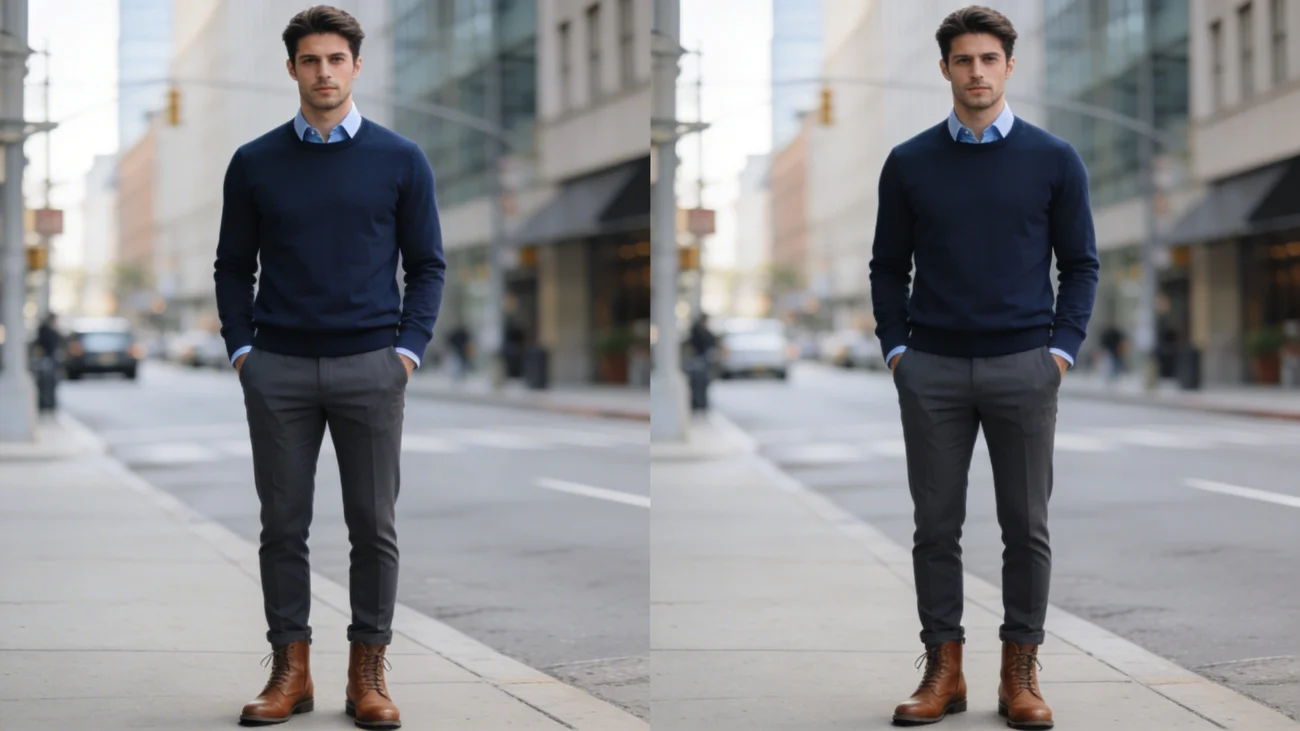
For office days without client meetings, layer a 16-gauge merino V-neck over a light blue Oxford shirt and charcoal chinos. The V opening shows 3–4 cm of collar and a hint of placket, creating vertical lines that lengthen the torso. Avoid thick flannels underneath; their brushed surface grips knit fibers, causing bunching and uncomfortable arm movement during desk work.

Choosing a sweater that is one shade darker than your shirt but lighter than your trousers creates a clear visual hierarchy. This three-step gradient—light shirt, mid-tone sweater, darker pants—helps outfits look deliberate, similar to how designers build runway looks using controlled contrast and repetition.

Replacing a Blazer on Softer Office Days

On casual Fridays, a structured cardigan with a firm placket can substitute for a blazer when worn buttoned over a dress shirt. Look for models with tightly knit waistbands and minimal droop, ideally using 2-ply yarn for shape retention. Pair with pressed wool trousers and leather derbies so the lower half still signals professionalism even without a tailored jacket.

5

Layering a Sweater for Men with Jackets and Coats

Layering a sweater for men under outerwear demands attention to bulk, friction, and collar height. The goal is to maintain a clean shoulder line and smooth front, avoiding fabric stacking at elbows or under lapels. Choosing the right combination lets you extend lighter jackets into colder months rather than buying a separate heavy coat.

Layering a Sweater for Men with Jackets and Coats

Outerwear and Sweater Pairing Matrix

Matching sweater thickness to jacket type prevents overheating or restricted movement. Thin merino works under tailored blazers, while medium-gauge crews complement leather jackets and bomber silhouettes. Heavier Aran knits or shawl-collar cardigans belong under roomy topcoats or parkas where there’s at least 4–5 cm of extra chest space.

Outer Layer Type Ideal Sweater Gauge Best Temperature Range Suggested Outfit Example
Wool blazer 14–18 gauge merino 14–18°C Navy blazer, grey merino crew, blue Oxford, charcoal chinos
Leather biker jacket 10–14 gauge crew 10–15°C Black leather jacket, oatmeal crew, black jeans, Chelsea boots
Denim jacket Medium cotton blend 16–20°C Indigo denim jacket, striped cotton sweater, khaki chinos
Wool overcoat Chunky cable or turtleneck 0–8°C Camel coat, charcoal turtleneck, navy trousers, brogues
Puffer jacket Light synthetic blend -2–6°C Black puffer, slim fleece sweater, joggers, waterproof sneakers

Pay attention to sleeve circumference: a blazer sleeve around 17–18 cm at the cuff works with fine knits but struggles over thick ribs. If your jacket feels tight when bending your arms past 90 degrees, step down one sweater weight. This approach keeps silhouettes sharp rather than ballooned, particularly important with tailored wool coats and slim leather jackets.

6

Seasonal Styling Tips for a Sweater for Men

Seasonal Styling Tips for a Sweater for Men

Seasonal adjustments revolve around fiber composition and how many layers you combine. A sweater for men that feels perfect at 8°C can be stifling at 18°C unless the yarn breathes well. Rotating between cotton, merino, and heavier wools lets you maintain similar silhouettes while matching insulation levels to changing temperatures throughout fall, winter, and early spring.

Fall and Early Spring Strategies

During shoulder seasons, temperatures often swing 6–8°C between morning and afternoon, so prioritize breathable fibers like cotton or lightweight merino. A 200–250 gsm merino crew over a T-shirt lets you roll sleeves or remove layers easily. Earth tones—rust, olive, and camel—integrate well with denim jackets and field coats, creating depth without feeling seasonally out of place.

  • Use cotton-linen blend sweaters around 18–20°C to avoid overheating on commutes while still looking put-together indoors.
  • Choose merino crews in the 180–220 gsm range for offices kept around 21–23°C with strong air conditioning.
  • Rotate between two neutral colors weekly to reduce washing frequency while maintaining variety in your outfits.
  • Add lightweight scarves instead of thicker sweaters when mornings are cool but midday temperatures exceed 20°C.

Winter Layering Tactics

In colder months, think of your sweater as the middle insulation layer between a base and a windproof shell. A thermal or merino base layer around 150–180 gsm under a 3–4 mm thick knit traps warm air efficiently. Turtlenecks reduce exposed skin, which can cut perceived chill by several degrees during windy commutes.

7

Care and Storage to Extend the Life of a Sweater for Men

Proper care dramatically extends the lifespan of a sweater for men, often doubling usable years compared with machine-washing every wear. Wool fibers can recover shape after resting 24–48 hours, so frequent airing beats constant laundering. Understanding washing temperatures, detergent types, and storage methods prevents shrinking, pilling, and stretching that make even expensive sweaters look tired quickly.

Care and Storage to Extend the Life of a Sweater for Men

Washing, Drying and De-Pilling

Hand-wash wool and cashmere in 20–30°C water using a teaspoon of wool-safe detergent per 4–5 liters. Gently press, never wring, then roll in a towel to remove roughly 60–70% moisture before flat-drying on a rack. Use a fabric shaver monthly, moving lightly in one direction, to remove pills without cutting the underlying yarn.

Smart Storage Habits

Always fold sweaters instead of hanging; even a 300-gram knit can stretch 2–3 cm at the shoulders over a season. Store them in breathable cotton bags with cedar blocks or lavender sachets to deter moths without strong chemical smells. Rotate stack positions every few weeks so heavier knits don’t permanently crease lighter ones at the bottom of the pile.

Investing 10–15 minutes of care each month—airing, de-pilling, and refolding—often preserves a sweater’s shape and surface for five or more winters. This small routine can save hundreds of dollars over time compared with frequently replacing misshapen or heavily pilled knitwear.